Tuesday, September 24, 2019

Farmer Ira and The Gathering of the Juggalos

Ira Murkajetty was raised with the idea that the best investment was always real estate, and especially land.  Banks could fail, stocks could crash, but land would still be there, unless of course, it was on a coast or river, where it could be washed away.

So, when Ira was in his late 40s, he bought 80 acres of beautiful wooded land near a state highway and good, paved county roads in northeastern Florida.  His first choice was Ponte Vedra.  His second was St. Augustine. But, both were too expensive, so he decided to buy land in the small town of Alachua, Florida.  The land was high and dry, for the most part, and with only one swampy, boggy area, with only a smattering of alligators. He built a small house and a big barn and officially became a farmer. His main crop was hay.  For his other income, he bought and sold vintage Schwinn bicycles.

When Ira turned 75, he started to realize that his nest egg was not doing much for him.  He was also sick of losing auctions on E-Bay for old Schwinns and it was getting increasingly difficult to find spare parts.  One morning while he was drinking coffee and eating his morning English Muffin with Smucker’s strawberry jam, someone talked about how much money people could make by leasing their land out to be used for music festivals.

“Well,” he thought to himself.  “I have just the place.  It’s dry, the hay has just been cut, and so there’s room for parking and a stage. Plus it’s wired for electricity and I already have a detached bathroom with 4 toilets and 4 showers.”

He called up the Gainesville Chamber of Commerce, and then Jacksonville. Mary Kate, in Gainesville, was the most encouraging, albeit guarded.

“Are you sure you want to do this?” she asked.  “It just so happens that a group just contacted us for a festival this summer. They call it “The Gathering of the Juggalos,” and they usually get between 8,000 and 10,000 attendees.”

“That sounds nice!” said Ira. He had never heard of a Juggalo. His mind immediately converted it to “Buffalo.” In his mind, images of a cross between blue grass and a small symphonic orchestra playing pop tunes, like the Boston Pops Orchestra in Tanglewood, Massachusetts years ago.  Well, if this went well, he might even talk to people about having Shakespeare in the Park and perhaps weekly bluegrass and square dance meetups.

“Ira, if you do this, please be sure to get a LOT of liability insurance,” she said.

“Oh, okay,” he said. He was thinking about doing that anyway, since it would make it easier to sell the land or do anything.  So, he called up his insurance agent and got a $10 million umbrella policy for the next six months.  It was not expensive, and he felt sure he would recover it.

In the morning, Mary Kate called him and told him that she had given his number to a group called ICP, and also a company representing musicians.

He talked to a very polite man who introduced himself only as Shaggy. “We will have music from all our groups and artists. We’ll have a few wrestling matches, and also different types of fashion and drama exhibitions.”

“That sounds nice. How much will I be paid?” asked Ira.  We’ll pay you either $50 per person, or a flat $250,000, if you prepare the fields and put out bales of hay, parking, electrical outlets, porta-potties, open air showers, and camping spots where we need them.”

“I’m in! Yeeee hawww!” shouted Ira. He had not been this excited since he competed in a local rodeo when he was a teenager.

So, Ira did everything he thought would be prudent. He bought the umbrella policy. He got insurance on all of his equipment and business fixtures. He obtained casualty insurance for the relatively few things that could be destroyed.

He told his buddies at The Breakfast Shack that he was a bit surprised at how thick the contract was, but he signed it. “$250,000 will set me up! I’ll be able to retire! Finally!” he gloated.

But, all was not well in the little paradise of Alachua.  First, Ira wondered if his high blood pressure medication was making him hallucinate one night when he looked out into the field and saw two women in rainbow bikini tops and painted clown faces, and three men in baggy clothes and clown faces.


“What?  Clowns?  Clown masks?  Luchadores?”  he questioned.  He decided he needed a long night’s sleep.

But, his eyes had not deceived him.  On the agreed-upon set-up date, equipment appeared, beautifully choreographed, almost as though controlled robotically. If it had just been the setup for the music, he would have been less nervous.

He walked up to the guy he thought he had signed a contract with, but was shocked when he turned around and had on clown makeup, too.

“Shaggy?”  Ira asked.

“Yes, I’m Shaggy 2 Dope,” he said.  “Thank you again for letting us lease your property for our annual Gathering of the Juggalos.”


“Oh. Okay,” said Ira.  He still had the feeling he was in the kind of dream you have when you hit snooze and you shouldn’t.

Just then a pickup truck drove up and two men and two women got out.  They were wearing something that he had only seen on the box of his granddaughter’s My Little Pony and Sweet Unicorn toys.

“Whoop, WHOOP!  Juggalo family love!” they shouted. One of the women waved what seemed to be a plastic hatchet.  “Juggalo code!”  one woman sang out.  Ira was to learn later that these were the good Juggalos.  He never did encounter any of the 10-15 percent bad apples, who behaved with such depravity and criminal intent that they were classified as a national gang. If Ira had met them, it is unlikely he would have rented out his little corner of rural paradise.

Another shook up a 2-liter bottle of what appeared to be a neon-colored pop.  He could make out the word, FAYGO.

Ira looked at the different pieces of equipment.  It slowly dawned on him that ICP stood for Insane Clown Posse, and he had just agreed to allow his beautiful meadow to be used for a gathering of what looked like a cross between Halloween and the very last night at the carnival of a rural county fair. He also learned that the Insane Clown Posse was often considered the most hated band in the world.

“What is … uh… a Juggalo?”  he asked Shaggy 2 Dope.

“Ira, I’m totally straightedge, but I will say that not everyone is so. I’m so impressed with Juggalos. Most are very creative, entrepreneurial and hard-working. We started out poor. I mean rough in Detroit. But, we pushed ourselves very hard from the very beginning – we dreamed of this. We started out wrestling, then the horrorcore rap. No one really understood us, but then over the years, we have a strong gathering of like-minded people. But it can be a little rough.”

Whoop-WHOOP.


Ira shuddered.  This group was starting to scare him. “Uh. I think I might need to visit my relatives in Gainesville for a week or so.  You’ll have this cleaned up, right?”

“Yes. Without a doubt.  We work hard all year to make The Gathering of the Juggalos something they will remember.  Our record label artists will be performing, and we’ll have all kinds of acts and shows,” said Shaggy.

Ira cringed.

“I don’t think I want to know,” he said. Ira had a bad feeling about it.

“Well, perhaps you don’t,” agreed Shaggy.

Two weeks later, Ira returned to his farm and was delighted to see that it was very clean, just a few deep tread marks and a place where it looked like a few dozen bales of hay and some cut grass had burned.

That night, he noticed a new movie on cable.  The name of the movie was Family (2018, dir. Laura Steinel), and it starred Taylor Schilling and a young actress, Bryn Vale, as her young niece who, due to being bullied at school, wanted to run away and become a Juggalo. He watched the movie, and found it to be quite heartwarming (although the Juggalos still made him nervous).

A few months later, he got a call from Shaggy.

“Ira, we loved your farm and we were planning to contract with you again. But, your county banned us. They said that while they appreciated the fact that they could have access to federal funding since the Juggalos have been officially classified as a gang, the townspeople sort of rose up against it."

Ira had not actually spoken with the town officials. He had read an Opinion piece in the Alachua Weekly Gazette that criticized Ira for renting his place out for such a self-contained festival. "It did not benefit the community," said the writer.  "Everyone brought in their own supplies, and there was little or no economic activity in the community, except for groceries, alcohol, and gasoline. No one stayed in the hotels, and no one shopped in our Florida Heaven Antiques Mall." 

Ira focused his attention back on the conversation.

Shaggy 2 Dope continued, "Your place is a good place for a festival, though.  Let me know if I can be of help in finding a situation that would be a good fit."

"Maybe something like a blue grass festival with clog dancing?" said Ira. Those types tended to be really obsessive and would buy Indian tacos and embroidered household items.

Ira mentally calculated how long thw $250,000 would last him, and he drew a long, contented sigh. He was sorry that the bad apple Juggalos had ruined it for the Alachua location. Oh well. One must count one's blessings. He would talk to a financial advisor tomorrow.

In the meantime, “whoop, WHOOP!”


Friday, September 06, 2019

Technological Utopia or Economic Apocalypse? Today’s Oil Industry Embraces Both

Everyone knows that the oil industry is a very different animal than before the 2014 oil price crash. It can be difficult to assess what the animal is, however, thanks to “binary twin” narratives of utopia and apocalypse that have come to shape the industry.  With their ability to simultaneously generate euphoria and fear, the narratives destroy confidence.  Thankfully, a recent summer seminar brought together the two narratives in a single event and provided illuminating insights for a clearer path forward.

Those who attended the AAPG-HGS “The State and Future of Technology, Finance and Economics, Exploration and Production” on August 20 at Summer NAPE had an opportunity to explore the implications of both narratives as representatives of technology, finance, and operations participated in three separate panel discussions and fireside chats.  This innovative format was developed and organized by Mark Hamzat O. Erogbogbo, with assistance by AAPG.  Hamzat’s vision as a corporate strategist made the structure of the event uniquely valuable.

The event took place the at the George R. Brown Convention Center.
New Technologies
Thankfully, the euphoria-producing narratives appeared first, in the all-morning session dedicated to new technologies.  The extremely high cost of drilling, completing, and producing shale oil and gas has been dramatically reduced by using new technologies that improve efficiencies and allow companies to trim their workforce and drill fewer wells that have higher recovery factors. Further, the use of blockchain technology is allowing better monitoring of performance as well as more efficient back-office operations.

The euphoria is generated not only by the results produced by the new technologies, but also from the potential profitability of investments in start-ups.  A number of companies such as Chevron, Shell, Saudi Aramco, and Equinor invest directly in start-up technologies. Companies such as Frost and Sullivan and Darcy Partners act as both scouts and mentors along the way. Many operators have new technology and innovation centers, and they dedicate at least some of their operations to being a living laboratory for beta-testing the innovations. The efforts often center around machine learning-focused simulations, modeling, information management (Sidd Gupta at Nesh) and imaging, along with blockchain technologies (Andrew Bruce at Data Gumbo). Making the land and legal work more efficient is also the focus of a breakthrough (Ashley Gilmore at Tracts.com).  AI platform integrated to the human eliminating safety events, NPT, CAP/OPECX, and upcoming wearable sensors for improved safety (Travis Laman at DeltaPerform) and water treatment and sourcing improvements (Josh Adler at Source Water) have made strides in oil field services.

Guiding the start-ups are companies such as Frost and Sullivan (Ethan Smith), while Microsoft provides enterprise digitalization support.  The potential for technology to be dramatically transformational and to turn now marginal (or money-losing) plays into sustainable, profitable, and environmentally friendly ones was the underlying theme. The fact that technology is accessible to all was emphasized by Invatare’s Trond Ellefsen; with the notion that companies of all sizes and scales of operations can find a way to be profitable.


Finance and Economics
The fear-inducing apocalyptic narrative kept the audience awake in the usually soporific after-lunch sessions. Economics and financial executives, Jeff Henningsen, Ed Hirs, Casey Minshaw, and Jim Harden, pointed out that North American exploration and production companies saw their net debt rise from $50 billion in 2005 to nearly $200 billion by 2015.  Service companies also entered into massive debt positions, since large capital expenditures were required to be able to meet the needs of their clients.

As several pointed out, in 2018, uncertainty gripped the industry as it seemed that some of the largest companies would not be able to restructure their debt. The debt problem continues to make headlines in The New York Times and The Wall Street Journal, and more apocalyptic of financial reporters regularly question whether or not the debt trap will trigger another financial crisis. The result is that there is little appetite for funding new ventures, and private equity funds are retreating rapidly from the scene from the high of $70 billion in 2015.  However, consolidations are the norm, and will continue to be so as they are viewed as a solution that has both short-term and long-term efficiency benefits.  The price of oil is expected to continue to stay fairly low, and the public is expected to remain hostile toward carbon-derived energy. Although the outlook was gloomy, there were glimmers of optimism and enthusiasm with respect to mergers and acquisitions, and the technological transformations that would make operations profitable.


Exploration and Production
The third session featured operations, and the fireside chat structure of this session, facilitated by Godswill Nwankwo made it possible for individuals to speak openly and informally about their views of the trends of the last few years, and the directions that are most likely to be the true path forward. New technology’s potential combined with tight funds united for a general consensus that the oil field of the future will have fewer people, more automation, and better placement of laterals. AI Driller’s Felipe Armaza and Stage Completions’s Carlos Piñeda pointed out that people who will thrive in this environment will be the ones who manage data from diverse sources, make data-driven decisions quickly, and who are able to detect when the models may not be accurate.  Shell Technology’s Hani Elshahawi pointed out the importance of being agile with respect to technology and innovation. What it means for all geoscientists and engineers is that not only do they need to be able to integrate data and work with multiple software platforms and applications, they also need to understand how the real-world physical fundamentals (the rocks, the reservoirs, the produced fluids), look and behave in the digital realm.  

The binary opposition of the two prevailing narratives in today’s energy industry is likely to stay in place for the foreseeable future, and while it can be confusing for a person who is trying to launch a career or put together a deal, understanding the underlying reasons for them can equip one for success.


Susan Nash, Ph.D. 
https://www.linkedin.com/in/susannash/ 

Brief biographical sketch:
Susan Nash is Director of Innovation, Emerging Science and Technology at the AAPG where she works to promote investment, knowledge transfer, and innovative application of technologies that protect human safety and the environment while they increase the efficiency, supply and distribution of energy.  She has over 20 years of experience in geology as well as economic and technology development. Nash has published in the areas of machine learning, new technology, economic development, and the use of narrative strategies in persuasive documents.  Her Bachelor of Science, Master of Arts, and Ph.D. degrees were earned at the University of Oklahoma.


-->

Monday, February 04, 2019

What do you do if your brand is being damaged by online bullies and trolls? The Daily Mail's "unmasking the trolls" approach

Fed up with the social media accounts dedicated to insulting Meghan Markle, Kensington Palace and the U.K. tabloid, The Daily Mail, clawed back by putting the photos, names, and hometowns of the owners of social media sites that had posted hateful posts. The headline immediately attracted attention for calling out the critics: "Unmasked: The cruel trolls who spew bile against the Duchess of Sussex on social media, branding her a 'hooker' and 'trash'... and call for #Megxit," and the article contained images the owners of the social media accounts and some details about their posts, their identities.

It is by no means the first time that The Daily Mail has used this approach. It has been done before in the case of British politician Jeremy Corbyn. However, it is not an approach that is regularly seen in the U.S., and many of the Meghan Markle critics are based in the U.S.

Question: Do you think The Daily Mail's strategy will work to stop people from saying and posting harsh opinions and speculation about public figures?

There have been some complaints from the people who were “unmasked” that they feel they are now in danger from people who are offended by them. But, since their information was public, do they have a defensible case? 

If someone has a social media account in which they insult celebrities, promote conspiracy theories, or encourage people to act out, is it a good approach to “expose” them? 

On another level, when a person or entity with wealth and power  publicly hits back after receiving criticism (no matter how harshly worded or threatening) doesn't it set up an "underdog" dynamic? And, in doing so, does it somehow start to legitimize racist, misogynist, ad hominem attacks?

Will "clapping back" backfire on The Daily Mail or Kensington Palace, as in the case in Amy's Baking Company? 

Here's a bit of background: After celebrity chef Gordon Ramsey savaged Amy’s Baking Company during an episode of Kitchen Nightmares in 2013, Amy's basically self-destructed on social media when they attacked back. Internet critics descended, and instead of coming up with a positive media campaign, Amy’s Baking Company became increasingly defensive.

Amy’s Baking Company’s responses became increasingly unhinged, to the point that they were absolutely excoriatingly vicious.  You have to read them to believe them.  A HuffingtonPost.com article contains some of the jaw-dropping responses.

Amy’s Baking Company ended up having to shutter their business, suffer financial losses, and face the fact that they were victims of their own poor strategies. 
What could they have done differently?

In any case, there seems to be a profound loss of civility and civil discourse, first in the anonymous or almost anonymous commenters on the Internet, and then within groups or hashtag clusters where people who share the same opinions express themselves in harsh ways, perhaps for comic effect, or perhaps simply for rhetorical impact. In any case, the discourse often has real-world impacts, in damaging brand and brand images, along with other possible consequences. 

Responding to bullying is never easy, and an historical analysis of public relations responses to crises or controversial public figures could yield new insights.


References
Are Social Media Trolls Threatening Your Online Brand Reputation?  https://www.onlinemoderation.com/socialmediatrolls/ 

Honorof, Michael (21 Nov 2016) How Amy’s Baking Company Ruined Itself on Social Media. FoxNews.com https://www.foxnews.com/tech/how-amys-baking-company-ruined-itself-on-social-media

Tepper, Rachel (14 May 2013) Amy’s Baking Company Freaks Out Online After Epic Meltdown on Gordon Ramsay’s “Kitchen Nightmares” HuffingtonPost.com https://www.huffingtonpost.com/2013/05/14/amys-baking-company-kitchen-nightmares_n_3274345.html 

Wace, Charlotte (2 Feb 2019) Unmasked: The cruel trolls who spew bile against the Duchess of Sussex on social media, branding her a 'hooker' and 'trash'... and call for #Megxit  DailyMail.com
https://www.dailymail.co.uk/news/article-6661499/Cruel-trolls-spew-bile-against-Duchess-Sussex.html

Sunday, April 15, 2018

Unconscious Reenactment: Bruegel and the Jolly Bagpipes and Beauties at the Medieval Fair

Dancing to Bagpipes at the Medieval Fair / April 8, 2018 – Norman, Oklahoma
I felt as though I had stepped into a painting by Pieter Bruegel the Elder. Granted, he was painting during the Renaissance, and what I was attending was supposedly medieval, but the Medieval Fair is, as far as I can tell, less about historical accuracy and more about imaginative fancy.

On the one hand, it’s performance art. It’s the best kind because it’s intentional and so it’s self-aware as art being created for art’s sake, but it’s infused with fantasy, role-playing, and a deep desire to time-travel, self-invent, imaginatively recreate reality, or at least become the embodiment of a timeless energy that lives in the hyper-oxygenated air of feeling that one has infinite possibilities, and for all the angst and self-recrimination you might feel at times, joyous abundance prevails in a costume you designed just for this moment.

Dancing to Bagpipes in the Open Air at the Medieval Fair, Norman, OK  2018 - photo susan nash
 It was very chilly for an April afternoon, and people were wearing coats, hats, even gloves. It was not possible to see everyone’s costumes because they were sometimes covered up. The dancing girls – half barmaid, half bellydancers – showed midriffs that were red from the cold, sporting goosebumps along with the panoramas of tattoos.

On the stage were four musicians: a person with a drum, a man with a mandolin, and two bagpipers. The bagpipes were of different designs, and so they produced different sounds. All meshed together in an infectious, jolly cavalcade of melody, harmony, and skillful percussion.

The songs were perfect for dancing, and it did not take long for all the lords, ladies, minstrels, waifs, and wenches to dance heartily in the dry grass, much to the amusement of the spectators who were seated on parallel rows of bales of hay.

When I first heard the bagpipes and I saw people dancing, I felt a bit skeptical. Did people really dance to bagpipes?  I thought of them as being used to fan the flames of warrior ardor and to panic the horses in the a Scottish highlands battle, or to play deeply, forlornly at a funeral. But a fair? 

Bagpipes, drum and mandolin - Medieval Fair - Norman, OK  2018
 I took photographs with my phone, and as I was mulling over them on the cloud in Google Photo Gallery, the colors, composition, and shapes of the people made me think of Pieter Bruegels’s The Hunters in the Snow. So, I looked up the work of Bruegel, and imagine my surprise when I encountered the Wedding Dance in the Open Air (1566). I had seen it before (it is, after all, a very famous painting), but what amazed me even more than the visual allusion and similarity was the presence of bagpipes.  

All I could think of was that I was of such cosmic coincidence that there must be some sort of meaning in the utterly adventitious visual parallels that I could not have duplicated without having been in the planning of some sort of historical enactment or a pageant or play.

Pieter Brueghel the Elder – Wedding Dance in the Open Air (1566) - wikipedia
Another stunning coincidence was that I had just left the Fred Jones Museum of Art on the University of Oklahoma campus and had decided to visit Reeves Park, which is on South Campus. I went from a very formal museum of “high art” where my mind was definitely shaped into thinking of art in terms of its representational and conceptual aims, to the annual Medieval Fair where it was a living gallery of people exploring what they imagined medieval to be, and to express art by making themselves into works of art. The simplistic side of me would dismiss the Medieval Fair as pure kitsch.

Yes, there was the carnivalesque – the idea of a Dionysian transformation through letting go and entering a kind of divine madness (in Dionysius, the madness of the grape), but the religiosity and the dark skirtings along the edges of death were largely absent. This was not the kind of love/death juxtaposition of a Shakespearean tragedy (Othello and Romeo and Juliet come to mind). Instead, here in Reeve’s Park, with the bagpipes, the 45 F air, the costumes, dancing, with fencing and jousting exhibitions, there was a sense of play, of exploration, and above all, acceptance.

So, perhaps the ritual that was most resonant with the event was the wedding, with the dancing in the open air. Weddings in the Renaissance represented future, prosperity, the prospect of the familial issue, which is to say children and lots of them… with an abundance of good food, good cheer, and good health.


Reference:
Pieter Brueghel the Elder – Wedding Dance in the Open Air (1566)
Detroit Institute of Art
https://commons.wikimedia.org/wiki/File:Pieter_Bruegel_the_Elder_-_Wedding_Dance_in_the_Open_Air_-_WGA03505.jpg


Monday, April 09, 2018

Found Installation 1: I Heard the Voices of the Angels

I decided to view the world as a great living art gallery, and things that caught my eye could considered intentional "found art" (l'arte trouvee) of the early 20th century. It is a wonderful way to view the world -- suddenly everything has more significance, and it becomes expressionist, postmodernist, conceptual art.

In 1967, earthworks artist and photographer Robert Smithson put together a series of photos which he called "A Tour of the Monuments of Passaic, New Jersey," in which he imagined the crumbling factories of New Jersey to be monuments. He was clearly making a critique of consumer culture, modernity, and environmentally damaging industrialization (and its aftermath in decaying obsolescence).  I have admired that work, but what I decided to do was to take it even further and include different types of accompaniments (experiential as well as critical).  It is fun to do, and I would like to encourage everyone to give it a try. This is my first.

Here's my first "found installation," which I call "I Heard the Voices of the Angels" 

Narrative Accompanying the Installation: The Homeless Passerby
And then they lifted me up.

I was seated in a chair nicely placed in the shallows of the Arkansas River, near the 11th Street Bridge in Tulsa, Oklahoma where I was fishing for catfish and the souls of the pioneers (they're hard to catch) when the trumpets sounded, the angels sang (or better yet, roared), and my hard-won body ("hard-won" because it's hard to make one's way into an incarnation of any kind, especially that of a human being, and to finally have my consciousness housed in a skin-and-bone bag has been a tremendous relief) flew out of my hands like a helium balloon caught on the heels of a late-March 55-mile-per-hour gust front.

Photo taken of the Arkansas River in Tulsa, OK near the 11th Street Bridge / photo credit: susan smith nash

I was shocked but not disappointed.

This incarnation has not been easy. To all those who see me, I'm a homeless Native American veteran who lives in basement of the burned-out synagogue near Cheyenne Street, who brings bags of Friskies cat food to the feral cats and kittens who live under the 11th Street Bridge. I'm missing quite a few teeth, and people think I'm addicted to meth, but I'm not. I never do drugs. But, I do hear the angels and I do see messages in the clouds, the wind, the currents in the river, and in the song of the Channel Cat, that great, 40-pound bottom-dwelling riparian saint, whose body takes on the plastics, heavy metal, chicken farm excrement, and fertilizer run-off of the upper Oklahoma, Arkansas, Kansas, Missouri watershed.

Note the ridge of resistant sandstone. photo: susan smith nash
The chair warmed up in the light of the Sun. The chair suggests what was there before, but now is gone.

But once the initial intrigue has passed, and you're no longer envisioning what was in the chair and why it was there, your focus directs itself to the platform (the riverbed) and to the water's qualities -- its clarity, its current, its surface expression, with ripples, splashes, and deviations around brush, trash, and trees.

The Arkansas River levels fluctuate based on Keystone Dam flood control activity / photo credit: susan smith nash

Narrative Accompanying the Installation: The Observer
What is foregrounded is the notion of what is relatively permanent -- what stays, what persists, what lives on -- when the body that was in the chair flies up and is potentially lifted up to meet its maker (the Rapture is one possible explanatory framework). What lives on after we are gone? And, what were we in the first place anyway?  The body is the wrapper around a mind that imagines itself to be a self; a package for consciousness.

But perhaps the consciousness is not really confined to that wrapper or package (or human body).

What is also foregrounded is the notion of the edge. Notice how the chair is at the edge of a ridge of a rock formation that constitutes part of the riverbed. The riverbed consists of layers of sediment and rock formations of variable resistance to erosion. The harder layers resist erosion. The softer layers are worn away and their grains are deposited in sand bars, points, and little mid-stream islands.

A Navajo sand painter is usually a medicine man of high rank and respectability in his community. The sand painting is a work of beauty, but that’s just part of the story. The purpose of it is to train the mind and to heal the body by means of aligning energies and pleasing the gods. The different worlds are represented, including the underworld, and the notions of past, present, and future come together. The flowing water, the eroding rock, the sand grains that flow down the river to deposit themselves here, and then redeposit themselves there, are very much a living sand painting, and if we sit in the chair so close to the rock and we let ourselves become one of those sand grains, we can find ourselves taken to where Nature wants us to go. We travel. We flow. We pause to nourish ourselves while we listen, sleep, and consider what we understand as reality in our small nook of the world.

Polysemous Interpretation from the Medieval Cleric
Literal / Historical: We see the literal presence of the chair sitting in the middle of the Arkansas River in Tulsa, Oklahoma.

Tropological / Metaphorical: We see the metaphorical implications, and the tension between the permanent and the ephemeral.

Allegorical: There are the existential implications, and the issues of our fundamental ontological insecurity, which has to do with how we see beingness, becomingness, and what it takes to be real.

Anagogical: Then there are the anagogical interpretations, the ones having to do with the individual's progress toward salvation (using a model from the Medieval times, the Scholastics' mindset). The afterlife is at issue here, and yet, instead of coming to this interpretation last, as one would normally do, the "I Heard the Angels" refers to the Rapture, and thus the anagogical interpretation is the first one.


Thursday, April 05, 2018

Turtle Sanctuary

It was a hot August afternoon, and we were thinking about sitting on the beach at Sayulita. But, it was the final week of summer vacation and Sayulita was bursting at the seams with people who made the 5-hour drive from Guadalajara to enjoy time in the ocean and gorgeous sunsets. Sayulita was more complicated by the storms that washed out the streets and revealed that they were built on a foundation of construction trash, ranging from cement blocks to tetanus-inducing chunks of rusty metal.  

A few years ago, Sayulita was a tranquil fishing, surfer town. In a few years more, Sayulita will probably be a series of one-way flagstone streets with neat sidewalks, and a pedestrian only central plaza / beach area. But, that’s all in the works. Right now, Sayulita has a boom town feeling, and that same scramble for commercialization. If you have land, you can develop it. If you don’t and you are an American or a Canadian, you can add to your portfolio and expect a healthy rate of return. At least that’s what websites promise.  Perhaps they are right. Undoubtedly, they are right.

We are in the land of endangered sea turtles. They live here on the Pacific coast of Mexico, and the government of Mexico has put great effort into protecting them, and setting up incubator programs to protect the eggs and then release the hatchlings into the ocean. 


In the meantime, we decided to drive 20 minutes north to Lo de Marcos, a little village town with wider streets and a large plaza. The beach is wide and clean, although it does not seem very good for surfing, and there do seem to be some rather scary offshore currents.  I’m not sure if those aspects will limit growth in the future. It is hard to say. All the attempts to evaluate real estate investment potential starts making my head spin. I’ve spent much time planning, proposing, and making offers on property, without any real results. Now, I just have the dull feeling one gets when looking at the Dow hit 23,000 and you were afraid to get in at 15,000 because you thought it was overpriced.  

What is really endangered here in this gorgeous stretch of beach. Clearly it’s more than the turtles, and it’s also more than a quieter way of life. I think that what is endangered in this gorgeous stretch of land is the world of dreams and fantasy. If dreams are too painful, we try to put them out of our mind. If fantasies no longer motivate, but just remind one of the impossible, then we eliminate our own ability to generate fantasies.

Endangered.

What puts us at risk is what give us true joy and the push to become better people and to have a better world. If the world does not endanger this, we turn around and annihilate precisely those things that make us most valuable, those things that make life most precious.


A small dog is digging in the sand underneath a table at the seaside restaurant. Another dog flops down under our table and falls into a deep sleep. I wonder how much dog poo is in the sand we’re walking in.  There are some questions you just shouldn’t ask.

Monday, September 18, 2017

Twisted Cause and Effect: Blame the Victim

(Click here for the Podcast)  Why Did My Gaboon Viper Bite Me? I Thought We Understood Each Other!

Sometimes you really can blame the victim and do it with full confidence that yours is the moral high ground. For example, there are the thrill-seekers who become tornado chasers and then get stuck on a highway that does not happen to go where you need it to go to get out of the way of the approaching vortex, is one example. Also, we can point to the people who refused to evacuate their beach houses before the arrival of a Category-5 hurricane with 10-foot surge and monster waves.

Even then, it’s really hard to condemn them, especially since we eagerly devour their close-up videos of nature’s beasts. In a certain way, we’re complicit. Besides, in some cases, they seem heroic, especially if they’ve prepared and are well aware of the danger. We may even be financing their risk-taking. Think of all the expeditions to the South Pole that were funded by donations, even as the donors knew full well that there was a fairly high likelihood that the intrepid crew would not return from their 2 or 3-year quest – for a penguin’s egg, photographs of ice formations, rare phenomena. With today’s technology, there’s not the same need to explore on the ground, given the nano-satellites that have remarkable resolution. We can see it all from space. But, yet, we want the experience. If we learn something, all the better, but what is most attractive is that it’s that moment of raw awareness that this is as extreme as it gets – and you’re a part of it.

So, I can understand storm-chasers and explorers of the Antarctic.

I don’t understand the tourists who run with the bulls in Pamplona. But, perhaps that’s a part of a kind of bullfighter mass psychosis. Go to a bullfight. Experience the corrida.  Then, be a DIY bullfighter and run with the bulls in Pamplona. There’s tradition and symbolism in this, so, again, I find myself giving the victims a pass.

Where it becomes more complicated is where someone is engaged in risky behavior that is self-destructive and seems, on the surface and from the outside, to be really, really delusional.

I’m thinking of people who have dangerous pets. For example, there are the people (mainly fairly young men) who have venomous snakes as pets. Many are ones I had never heard of until I binge-watched episodes of “Fatal Attractions” on Animal Planet. There are pygmy rattlers, West African Gaboon vipers, black mambas, and many more, that are not only deadly, but most hospitals do not have anti-venom. Then there are people who are mauled and killed by their pet alligators, Burmese pythons, lions, tigers, and chimpanzees. What are they thinking? Clearly there is a fantasy scenario and a deep need that is being satisfied. There could also be an identity issue, which is to say that the “pet” serves as an extension of themselves, and perhaps possesses the attributes they’d like people to think that they have. Wild? Deadly? Powerful? Invulnerable? A child of the untamed wilderness? Free? Well, some of those attributes seem somewhat attractive to me, but I don’t think I need to share my living room with a gabon pit viper or an alligator to feel I’m a child of nature. Plus, I think the reptiles smell bad.


from Wildlife.org  - Burmese python hatchling in Key Largo
When we blame the victim, we employ causality as a logic structure.

It’s really simple:
    You kept a pygmy rattlesnake in your house. It bit you. Your own decision hurt you. And, let’s also mention that there was a pretty high likelihood that the snake would bite you, especially since you liked to play with it, because you thought you had a special relationship of “mutual trust” with it.

Safety regulations and codes are built on causal logic, but they’re also fraught with open gaps that make it difficult to actually establish a culture of safety. It’s not just the “blame the victim” mindset, but it’s also because people are not thinking of the delusions and cognitive bias that underlie the risky decisions that are made.

Let’s take a look at the example of the pygmy rattlesnake again:
    You kept a pygmy rattlesnake in your house. It bit you. Your own decision hurt you. And, let’s also mention that there was a pretty high likelihood that the snake would bite you, especially since you liked to play with it, because you thought you had a special relationship of “mutual trust” with it.

Let’s review the last part: “because you thought you had a special relationship of “mutual trust” with it”.  It is precisely that “because” phrase where we get in trouble. It’s the weak link in the actual adherence to safety protocols. They’re why a “culture of safety” is often hard to actually enforce.

It’s why so many people do not follow good advice. They think that they have a special relationship with or unique understanding of the hurricane, the tornado-spawning storm system, the alligator, the Burmese python, the bad boyfriend, and that their unique knowledge or understanding will protect them. If, for some reason, it does not go quite as planned, they think the emotional payoffs (and sometime financial spoils) will compensate.

And, sometimes they’re right. But not often.

And, in the meantime, the simplistic cause-and-effect argument we utilize to blame the victim is satisfies us because it’s elegant in its simplicity and symmetry.

But, if we’re serious about writing a series of safety guides or developing safety training, we’ll need to be more realistic, and actually take the time to address the aspirational hopes and dreams, or the deep-seated emotional narratives that lurk under the surface and influence behavior.

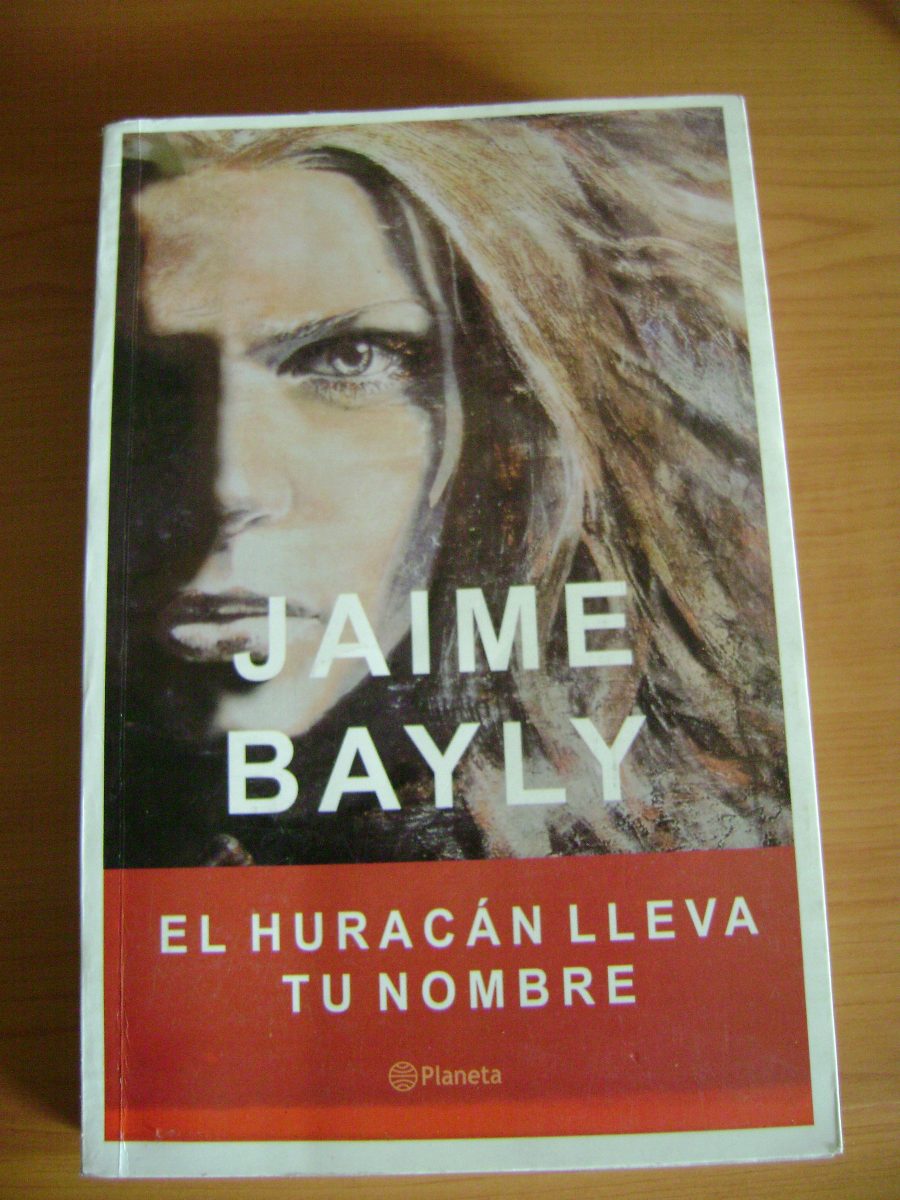
What Makes Us Keep Listening? Discovering Jaime Bayly

click here to listen to the podcast (mp3)

I was in a meeting the other day with the goal of coming up with economic development projects for Pawnee. I’m all in. After all, I have some pretty significant skin in the game (a house). But, even if I did not, an economic development meeting would be catnip for me. I love, love, LOVE coming up with economic development schemes. Pawnee is small (pop 2,200), which means that it does not take much positive economic activity to move the needle.  I love it.

At any rate, there were six of us in the meeting:  myself, the Pawnee mayor, the Pawnee Nation College president, a cereals and grains expert from OSU (Oklahoma State), a grant writer from OSU, and a restaurant / hospitality expert. The cereals expert had a Ph.D., I’m thinking in agronomy, or something like that. She was from Mexico, and I asked her if she spoke Spanish. When we were alone, I proceeded to inflict my Spanish on her – it was great! Her first response was to ask me if I happened to be from Peru. Imagine my delight! I listen to recordings of myself and hear nothing but a hideous gringo accent. So, it was delightful to think I might sound Peruvian. I know in my heart of hearts that I don’t really sound Peruvian, but if my accent naturally gravitates that way, I’m willing to try. Plus, I really like Mario Vargas Llosa and I listen to his lectures quite often. So, I decided to listen to all the Peruvians I could find on YouTube.

The first Peruvian I found (besides Vargas-Llosa) was Jaime Bayly (pronounced Bailey). He’s written a number of books, the first one being a coming-of-age roman-a-clef that garnered great notoriety. The novel, entitled, “Don’t Tell Anyone” was made into a movie. I tried to watch it, but was put off by seeing adolescent boys in various homoerotic overtures. It made me think of my son as a young teenager, and I felt a bit sick, and a powerful maternal desire to put a stop to Mother Nature.


Jaime Bayly has a late night talk show that’s available on YouTube. I listened to it and really liked it. He’s in Miami now (unsurprising) and so his Friday program had to do with the potential impact of Hurricane Irma on Florida in general, and Miami in particular.  He was fun to listen to, and I found myself listening closely to his accent and realizing that I tend to drawl when I speak Spanish, and that’s precisely how he speaks. How delightful!

I proceeded to try to listen to every one of his shows I could find. I quickly learned that Jaime Bayly is an American citizen who voted for Mitt Romney, an avowed conservative, and an extreme opponent of anything Chavez or Maduro from Venezuela. In fact, he loves to bring on guests from Venezuela and then grill them about their political beliefs, knowing full well that they can’t exactly denounce the existing political system and expect to have any kind of work when they return home.

Jaime Bayly is every talk show guest’s worst nightmare. I don’t know why they agree to be on his show. He is like the red laser sites in a sniper’s rifle (coincidentally, he was part of an earlier talkshow called “Francotirador” which is “sniper” in Spanish).

Watching his show is awkward and uncomfortable to me, albeit Spanish is not my first language, and nor do I have a dog in the hunt. He’s extremely flattering, even unctuous, but that does not stop him from asking questions designed to elicit the maximum amount of discomfort. It’s raw and potentially humiliating. For example, he grilled a Venezuelan playwright about Venezuela’s voter fraud and corruption that put a president in power who was nothing more than a cheating dictator. The author did all he could to say that politics was not his métier, but to no avail. Bayly was having nothing of that! He attacked the soft underbelly, and the author was utterly flustered. I did not like it. The author tried to explain that art is more universal than politics and with any luck at all, it will appeal to all people and be a unifying force.


Art is not propaganda. The guest did not say that, but he could have, except he was too flustered by Jaime Bayly’s savaging of the entire contemporary Venezuelan political control of art. He did get in a few comments about how even under dictatorship, it’s possible to create subversive art. Sigh. I just realized that I do not agree with my earlier suggestion that art is not propaganda. Actually, it is, and probably always is, whether overt or not.

I had the chance to visit Venezuela in 1999, before Chavez. It was a scary place, with high crime, and yet it was also a lot like the U.S.  There was a very sophisticated highway system, and baseball was the national sport. There were elegant malls and the universities were quite nice. I visited Simon Bolivar University. I also visited the government agency for petroleum, PDVSA, and was impressed by how modern they were.

Needless to say, when Chavez took over, anything having to do with oil and gas took a plunge into the abyss. He fired all the experts and replaced them with his buddies. I know I sound rather brainwashed in saying this, but it is the truth. It has been evidenced by the fact that Venezuela has not updated or upgraded their technology since Chavez’s takeover. Even when oil was $135 per barrel, Venezuela did nothing to reinvest in their fields. Instead, they used their oil proceeds for social and political purposes. I’m not saying that’s a bad thing (although Jaime Bayly would attack it!), but I am saying that the failure to put money in maintenance or new technologies will lead to problems.

I have not listened to very many of Bayly’s shows with Venezuelan guests. But, I have listened to enough to know that Jaime Bayly believes that Maduro was elected only because there was the most egregious level of voter fraud. He also thinks that Venezuela is the furthest thing possible from a democracy, and that the policies of the current administration have resulted in the destruction of an entire culture. He considers Maduro & Co. to be murderers.

I have to say that I agree with him on that point. But, I think he’s a bit mean-spirited beneath his unctuous flattery. Case in point: he invited an actress to appear on his program, and he instantly focused on her 5 marriages and her possible infidelities – by asking her how many “furtive affairs” she had engaged in.  I thought it was demeaning and took away from her work as a serious artist. But, since she had gained her reputation for doing nude scenes in the 1970s, and along the way earned the opprobrium of her family, I guess it was what the audience wanted to hear. But, yuk. Who cares!!!!! I think it is cruel.

At any rate, we can assume that since she gained fame and fortune from nude scenes when she was 19 years old in the 1970s that she had “perform” for her big breakthroughs. Jaime Bayly, whose claim to fame rests on his scandalous gay / bisexual behavior (and the fact that his family was very wealthy), can “own” his own transgressive narratives. In fact, in one interview he said that when some even suggested that he was simply pretending to be gay in order to sell books. Of course, sex sells, and it sells for the ambitious young actress. But, there is always a double standard, and she's not able to "own" her transgressive nature without receiving the vitriol of audiences. Madonna tried. Miley Cyrus tried. Countless others have tried.  They sell, but they still do not have the ability to "own" the self-exploitation. The ambitious young actress cannot. She does not have power, nor does she possess male privilege.

So, it was uncomfortable for me to listen to him ask the actress such questions. At the same time, however, I recognize that his success is all about scandalizing narratives and transgression. I would find that creepy and boring as well, except there is enough of the “real” Jaime Bayly that emerges to see that he’s a kindhearted person who cares about the welfare of all people, and especially the vulnerable.

But, Jaime was quite relentless in this case. I’m not sure if she secretly enjoyed the transgressive elements. She kept trying to steer the conversation back to her children and the fact she is a mother. That only served to make the questions more disconcerting and to make me really curious about her acting in the 70s.

At the center of Mario Vargas Llosa’s novels is some sort of sexual obsession. I’m most familiar with La Tia Julia y el Escribidor, and Travesuras de la Nina Mala. They definitely have a kind of Midsummer Night’s Dream awkwardness – the person who is helplessly in love, and who makes a spectacle of himself because of it. The family is embarrassed. The fascinating and inappropriate woman (love object) is calculatingly Machiavellian. And, through it all, there is a slow burn of desire, only rarely assuaged.

Vargas Llosa has discussed the fact that he puts sexual desire at the center and underneath his novels. He is adamant that it is what life is, and that life is sex, and that it is the engine of art. I don’t like to think so. It seems facile and reductive to me. But, I know in my own creative writing I tried to introduce every possible emotion – especially desire – as a way to express the meaning of life. So, even though my Puritanical side or my I, Robot side would prefer to be either really, really good at repression or simply mechanically logical, it’s not how I like to engage with art. But, as opposed to Bayly and Vargas Llosa, whose novels are very autobiographical, heaven forfend that someone think that everything I’ve written is a chronicle of my life! Scary. And yet, I do blend together feelings, desire, memories, and sensation for something I hope translates as life-engendering.


At least, that’s my feeling about Vargas-Llosa.  I’m not sure about Bayly’s fiction. I’ll have to read a few of his novels.

But, I do like Jaime Bayly’s interviews, even when they make me cringe.
Or, perhaps it is because they make me cringe.

“I Married the Waiter” Vacation Romances

Podcast:  I Married the Waiter

I just finished watching one of the most heart-rending documentaries I’ve ever seen, although I am sure it was not the producer’s intention. It was an hour-long exploration of “vacation romances” entitled “I Married the Waiter,” which is, in my opinion, an absolutely inspired title.  What a cautionary tale, I thought, and I expected the hour to be filled with lonely or over-stressed English women swept off their feet by men who were the antitheses of the familiar, rather pedestrian and predictable English men of their own experiences.

I was not disappointed.  Only one literally married the waiter, and she was one of the few who had a happy ending. Her Turkish husband teamed up with her in a town in northern England and they set up a mini-bazaar. They had true team spirit, and it seemed like a true partnership with mutual regard. The other relationships seemed forged by lightning bolts into Dr. Frankenstein’s laboratory that ignited long dead (and pretty much forgotten) flesh and fleshly libido, while shattering the glass ceilings of ambitious men who wanted to get somewhere in their lives.


The stories were painful, and I, for one, was filled with a “there but for the grace of God go I” feeling of relief.  It was the relief you feel when you what you thought was a shark swimming beneath you in the ocean turns out to be your own shadow.  In my own life, other cultures and other languages have held me in their thrall. I easily plunge into a state of fascination and heightened reality that feels like an awakening, and one in which I’m breathing pure oxygen while everything seems fresh, pure, transcendent.

My first experience with this experience happened when I was 16 and visited the Yucatan Peninsula with the Spanish club.  I was not actually studying Spanish, except on my own.  I was taking Latin and working ahead, but I liked the language, and most especially liked the book I had been reading, Incidents of Travel in Yucatan and Chiapas, by the 19th century U.S. government official and surveyor, John Lloyd Stephens, who was also a talented artist whose pen and ink drawings showed how tree-covered “hills” were in reality Mayan pyramids, long abandoned and forgotten by the indigenous peoples. I loved everything about that voyage of discovery.

I had also read every biography I could get my hands on that had to do with people traveling to Mexico. This particular fascination was fueled by Wednesday night Girls Ambassadors church services at Bethel Baptist Church in Norman, Oklahoma. We studied cultures and countries, met with missionaries and missionaries’ children.  

One particular daughter of missionaries had attended West Mid-High School with me during our 10th grade year.  I, who fetishized thinness, was astonished by her ability become absolutely skeletal. Looking back, I realize she was dangerously anorexic. I felt there was something terrible about her life in Guatemala, where her parents were missionaries.  Perhaps she was simply angry about being there.  That was what I thought at the time.  Later, I wonder if she had been subjected to some sort of violence. She was taciturn and dour, not at all friendly. I was shy and not likely to befriend her. So, I never quite knew what the backstory was.

I remember speaking with the tour guide who led us up the pyramid of Uxmal. He gave me his card and I started corresponding with him. I remember receiving letters from him. My heart would pound and I would attempt to read them. It was extremely motivating, and I started to buy the college textbooks for Spanish and teaching myself.  I never met him again, and I do not really remember his name. But, the letters ignited something within me that flowed when I played Scarlatti and imagined myself to travel in time back to the time of the Spanish court, where Domenico Scarlatti composed sonatas for his prodigy, the Princesa Maria Barbara.


The next year, my Spanish had dramatically improved, and my parents generously paid for a second Spring Break trip to Mexico with the Spanish Club.  I do not think they realized how almost criminally negligent our chaperones were. In fact, I do not even remember having chaperones.  While my classmates were binge-drinking and hanging together in packs, I was scurrying off on my own, engaging in conversations wherever I could. I gave my guardian angel a good case of post-traumatic stress syndrome, and came back home happy and without sunstroke, although I did suffer from the Montezuma’s revenge that no one ever hears about any more.

I did not marry anyone, nor did I have any physical relationships. But, I did write to a young chemical engineer I met.  I fantasized about what might happen in the future, and I continued to study Spanish and found myself increasingly drawn to the literature and the culture. I often wonder why I never did live or study in Latin America. But, my life definitely intruded, with marriage, divorce, education, jobs – and a rather turtle-like attitude.

The women in the documentary were definitely not turtles. When they finally poked their heads outside of cold, cloudy England and looked into the sun-kissed beaches and ancient souks of Morocco, Turkey, or the clear waters of the Aegean, they threw their shells into the breach and married, sometimes within a matter of weeks. They were brave, these women, all of whom were at a kind of breaking point when they went on their vacations. A few of the romances actually turned out well.  Most did not.

One woman, who was 71 when she married a 22-year-old young man from a small desert town in Morocco pretty much stated that she did it because she could not believe she was able to have a physical relationship that gave her so much magic. Well. Magic is not reality.  It did not work (not surprisingly). But, that’s what everyone would say. The magic is that it happened at all. I wonder if it was really worth it, though. She said, by her own account, that she has cried “buckets” of tears.  This makes me aware that there’s probably nothing more painful than a March – December romance when the woman is so much older. I was surprised that the rural family was so accepting of the relationship, but, well, there had to be some hopes for material improvement in their own lives. So – we all rise together, right? And, well, we must not forget that the traditional Muslim community is a collectivist society, and she probably did not realize that there would be other wives. She would simply be the first, who would potentially provide for the others.

I remember talking to an Uzbek engineer in Tashkent who was part of an infrastructure project funded partially by USAID.  He had two wives, and it was perfectly legal and acceptable in his world.  He said it was complicated because they maintained separate households, and it was expensive. I suppose he was not lucky enough to catch one with a big dowry.  

I often wonder what kind of personality Barack Obama’s mother had as a young woman. I always think of her as a young women who dodged a bullet.  Obama’s mother could have been like the young American woman, Lori Berenson, who fell in love with a radical in the Sendero Luminoso in Peru, and was convicted of trying to overthrow the Peruvian government. She served 15 years. I remember watching documentaries when she was in prison. Her parents were tireless in trying to free her, and finally their efforts paid off.  I imagine there are any number of young, idealistic, love-stricken Americans who were not so lucky.


It is easy to seduce both men and women into revolutionary causes. It’s not just for young men, such as Simon Bolivar, who absorbed the concepts of the French philosophes (Rousseau, Voltaire, Diderot, and Montesquieu), and then went back to Venezuela as a firebrand and liberator. It also intrigued the Beats, with Che Guevara and Fidel Castro. Mario Vargas Llosa’s semi-autobiographical novel, Travesuras de la nina mala, weaves in and out of the narrative of a young woman who found upward mobility through her revolutionary ideas. Jane Fonda seemed that way as well, and then one realizes she was not the tough woman she seemed to be, but instead brainwashed in a kind of psychological Stockholm syndrome. But, at the core, is passion. I think that’s the ultimate appeal. It’s Byronesque and it sells well.

But, back to the documentary. It’s hard to generalize, but many of the younger women were at a turning point in their lives. They had graduated from college. They had gone through a painful breakup. They had very stressful jobs. They wanted a life with more connections and flow of human warmth, and they saw the Greek, Turkish, and North African lives as warmer and more connected. The older women were made to feel beautiful and desirable, and of course they fell, and they fell hard.

What that says about women’s fundamental basis of self-worth is pretty tragic, if you ask me, but there it is.


Tuesday, September 12, 2017

The Effect of a Few Wrong Turns: North Shore Soap Factory, Oahu, Hawaii

For the Podcast, click here.
I was looking for a restaurant where I could eat locally caught fish, listen to the soothing plinkings of a distant ukulele, feel the juice of a ripe pineapple dribble down my chin, and watch the surf crash onto rocks and sandy beaches.

That was easier said than done as I roamed around toward the North Shore and highway after highway was snarled with construction. I gave up and decided to simply go where the open roads took me.


And, they took me to an old sugar factory that had a couple of tour buses parked in front, and a few Japanese tourists taking photos of each other as they returned. I looked at the sign, but instead of being a sugar mill, it was a soap factory. I thought of the Lush chain and the wonderful, intoxicating aromas of spice, flower, herbs and musky perfumes, and I thought I would try it.

I entered and immediately made a mistake, entering the off-limits factory itself instead of the gift store, where tourists could observe the fabrication of soap through thick safety glass.

The colors and scents were delightful, and it was a super-saturated rainbow of color. I considered purchasing a number of bars, but then realized I still had blocks of hand-made soap from a trip I made to Hawaii several years ago, and so I did not really need more souvenirs or potential gift items.


I wondered how much they sold to Japanese tourists.  Soap is practical and a great gift and household item, but it is heavy and bulky. I would imagine the best market would be the upscale boutique hotels that might enjoy having tiny bars of soaps and tiny little bottles of bath soap, shampoo, and more. It surprised me that they did not have more miniature sets for sale. They would be great gift sets.

But, I’m not much of a marketer of soaps or artisan items, although I love the small factories and gift stores that one finds tucked away in unexpected places.

Next door, in the gift store, there were all kinds of coffee beans for sale and other food items. Again, I thought they were rather bulky, and it might make more sense to have a little coffee bar. But, if we’re talking about busloads of Japanese tourists, perhaps not. Perhaps the best would be to have a number of places for wonderful photos, and then keepsake experiences. I do not know.

It is interesting how we combine shopping and retail experiences with the memories we create for the future, and thus shape our concept of ourselves and the world. We order our knowledge of the world by means of the images we create, and even as we create them, we know that they are less than authentic, but more designed to capture the quirkiest products, the most dramatic slice of nature, the most super-saturated colors, and the most emblematic semiotics.


So, as I think of a photo of myself to create a memory of what I just experienced – the effect of a few wrong turns – I will take photos of what is most unique. It will be, for me, a representation of discovery, and more specifically, the rewards of discovery.

The photo, with its rainbow array of soaps, tiny colored bath ducks, plumeria, pineapples, Kona coffee, macadamia, and more, will be a visual reminder of how rewarding it can be to go off the beaten path and to open your mind for new things, for discovery. Of course, I could just as easily frame this as a cautionary tale of menace and danger, but thankfully, that does not occur to me, unless I’ve been binge-watching past seasons of Forensic Files.

Life is much richer as a series of joyous explorations and discoveries.


The Perfect Companion

(Podcast) For most people, it’s an animal.  That’s because they’ve already given up on people. Or, if they do include people as their predilect companion, it’s generally a temporary one.  A few hours snatched here or there, or a brief vacation, and then both are secretly glad to go back to work, back to a place where they don’t have to constantly perform for scraps of approval or fear they are always judged and on the verge of rejection.

Ay chihuahua, my little best friend!
After the Chihuahua races, Cinco de Mayo, Tulsa, OK


A dog, cat, or even iguana is infinitely preferable. Your dog is always happy to see you. It’s an open-hearted, boundless love, and if you need it to be all about you and no one else, you can condition your dog to dislike and even menace everyone except you. You can even justify the neurosis you’ve instilled into your companion animal by saying that he’s “protective.” Maybe he is. But, if you like the fact that your dog loves you, and you alone, there’s something else going on. But, don’t worry too much about it. You’re not alone. If your pet is an “emotional support animal,” it is very likely that the exclusivity is something that gives you emotional support.

I’ve had students and coworkers who have brought their emotional support animal (dog) with them to the classroom and to the office.  I suspect the dog went with them everywhere else, too.  Would they want their spouse, sibling, parent, or friend with them at all times?  I suspect not.

Many Victorian novels feature a “paid companion” – a kind of personal assistant considered higher than a servant, but mixed with the clerical and step-and-fetch-it duties were requirements to go to shopping and to cultural events (museums, openings, readings).  I always wondered while reading why a woman who was independently wealthy would saddle herself with a companion. Why not just go to the places alone? But, I suspect that it might not have been safe. It might have been considered somewhat disreputable. So, the paid companion was also a bodyguard and chaperone.

Lucha Libre at Elote, Tulsa, OK  Cinco de Mayo celebration
Perhaps the Victorians were more realistic than we are about psychological needs. Sometimes we live far from our families; sometimes our families are like driftwood on the beach, constantly swept out to sea, then brought back, redeposited in new configurations. It’s all very transitory and confusing. In fact, if I think about it too much, tears well up, and I think of all the beautiful moments that time and circumstances swept out to sea.

All the loss and change in the world is hard to face. Talking to a human companion often simply compounds the issue. Even if you’re not feeling on the verge of being judged and found wanting, the conversations often veer into the bleak abyss of uncertainty and the lack of control we have over our lives and the seething, unstable environment.

My son had a lemon beagle named Sammy. For a while, Sammy was a kind of companion animal and emotional support animal for me when my son joined the Marines. But, I, too, abandoned Sammy when I moved to upstate New York. I’ll have to do a lot of rounds in purgatory for that, I believe.

I had to conclude that while Sammy could have been a good companion animal for me, I was a wretched one for him. Dogs make great emotional support animals. Humans, in contrast, are horrible emotional support animals for dogs. At least I was for Sammy. I’m probably equally terrible for another human.

No wonder I feel a bit lonely sometimes.

*******
Then what, or who, is the perfect companion?

Who knows.