
Tinguely Querer decided to take a few weeks off between contracts and to play the stock market. Granted, it was in the middle of a bear market of historic proportions, but that did not deter Tinguely.
Her last contract had been to buy mineral interests for elderly people in the Texas Panhandle. Most lived in nursing homes and and appreciated the help. She had been working out of Caprock, Texas, situated between two large wind turbine farms and a feedlot.
Having signed a short-term rental agreement on a house in the town’s newest subdivision, Tinguely decided to stay. It was convenient, and she would be comfortable as she figured out how to profit from panic selling, fear, and raging bears. Plugging in her laptop and G3 card, Tinguely could get high speed Internet and follow the market, even in the most barren patches of the High Plains.
“All the big money was made during bear markets,” said someone on the radio.
Tinguely supposed one could say that about the Black Death, Plague, and tsunamis as well. Someone pries the molars and the gold fillings from skulls and, with a little bit of pluck, start a jewelry shop. When life hands you lemons… get a pair of pliers.
It was a stretch. Tinguely would be the first to admit she knew little or nothing about analyzing market trends and selecting stocks. The work she was doing for her dad and for other clients had to do with oil and gas leasing and environmental evaluations. As the business soared, Tinguely started to feel a firm sense of identity.
Her dad, on the other hand, saw the other side. His friends and old business partners had been gutted by margin calls. Some lost up to $2 billion dollars of net worth in a single day. Now, the companies they had worked so hard to build and own a stake in, would suddenly change. Instead of being a major stockholder, Dad’s friends would be onlookers. The vultures would be in the driver’s seat. Tinguely could tell it bothered Dad.
“Watch yourself, Tinguely. Don’t get too cocky. You haven’t seen what I’ve seen. You’re young. I’m not,” said Dad.
Tinguely listened, but the words did not register. His experience was not hers.
“I don’t feel sorry for them. In fact, I’m glad I did not own stock in their companies. They were narcissistic. When they bought shares in their own companies using borrowed money, what did that really mean, Dad? They hoped to profiteer on insider information. Instead, they devastated lots of people’s portfolios,” she said.
“Easy to gloat until it happens to you.”
“I’m planning to build shareholder value.” Tinguely’s personal boom had made her bold. She could invent herself. After all, she had already done it successfully.
Constructing an identity was on her mind. Now was the time to come up with a company name, or at least a concept name for the types of services she provided.
A bold name for a newly bold woman. The idea made Tinguely laugh. She knew, in her heart of hearts, she had been feeling vulnerable and unsettled since turning 30 a few months ago.
“By the way, Tinguely, can you meet with our client in Amarillo tomorrow?”
“Sure,” said Tinguely.
***************************
The drive from Caprock to Amarillo was long and dull, but 24-7 talk radio made it bearable.
FOX NEWS, FAIR AND BALANCED: The market took another apocalyptic plunge today, the Dow sinking 500 points while the President was giving a pep talk about the economy.
Rumors are out there that when the derivative hedges come due, the market will really dive, since derivatives represent – if you believe what the experts are saying -- 16 times the world's GDP. More than one person has already said it. When the derivatives tank, the Illuminati will take off their masks, and the Reptilian Aliens, who have been controlling the Illuminati (and the Freemasons) for the last three centuries will take over.
On the other hand, perhaps Armageddon isn’t just around the corner after all. In the last hour of trading, the market soared and the Dow closed 400 points up
*********************************
Climbing vines, creepers --
Our steel fences are overwrought:
gold melts, money burns.
(Old Dow Jones haiku, with kireji)
*********************************
The only trouble her plan was she could not sleep. Between LouLou, her large, noisy parrot, and the next door neighbor’s incessantly barking pugs, Tinguely was a wreck. Yet again, it was 3 am and she was nowhere near being able to sleep. Neither was LouLou.
“Play the ponies.” It was an unwelcome intrusive thought. It made no sense. There weren't any ponies around. Besides, Tinguely didn’t like the idea of horse-racing. Never trust a horse. It knows it can be shot if it breaks a leg.
***********
Tinguely met her neighbor while picking up Diet Coke cans someone thrown onto the front yard.
Her neighbor, Beryllium Markham, had flown in on her own small plane to check out her investments in the windfarms north and south of town. She was a lean woman with chiseled features, somewhere in her mid-50s. Her dark hair was pulled back in a chignon. Her stunning eyes were enhanced by eyeliner and lash-thickening mascara, coupled with smooth, flawless skin. She was prosperous and not very approachable.
Holding a copy of the Wall Street Journal in one hand, Beryllium smoothed her hair with the other. Beryllium explained that over the last several years, she had been also workin as a stock broker who did limited investment banking as well.
“Perhaps you can give me some stock tips,” said Tinguely.
“That sounds like a profoundly bad idea,” said Beryllium. Tinguely decided to take a different approach. She wondered if Beryllium were related to the pioneering female pilot, Beryl Markham.
“Did you ever live in Africa? In Kenya? Fly planes there? Your mom?” asked Tingeley.
“My great aunt. She was Beryl Markham. I’m Beryllium,” said the pilot.
“Nice,” said Tinguely. But, who would name their child Beryllium? Might as well be “Bear.” Beryl was a mineral. Beryl occurred in many forms, including emerald and aquamarine. Beryl was beryllium aluminum cyclosilicate. Beryllium was the key element. The attributes of beryllium included extreme heat resistance.
“I think I’d go with being called Beryl. Doesn’t sound so … uh… technical.”
She was going to add “scary strong,” but decided that was uncalled for. Beryllium was silent. Then she looked at Tinguely. Her eyes glittered unnervingly.
“You can call me whatever you want,” Beryllium paused. “The global economy’s on the ropes right now.”
“Who threw cans on your yard?” asked Tinguely. Instead of Diet Coke, someone had thrown Budweiser beer cans into Beryllium’s driveway. It looked very odd to have ten empty beer cans on a concrete slab.
"I don’t know. Let’s get back to the main question. The best way to make money these days is to do nothing. Book the money you would have lost if you had “followed your gut” as a gain. It’s all paper anyway. But, if you just have to gamble and lose, why not invest in gold?" she said. She paused. Tinguely’s face was puzzled.
“All the talk show radio hosts recommend gold,” said Tinguely.
Beryllium looked stern. “Tinguely, that was a joke."
"Did you know that most of the world's financial dynasties were born in bear markets?" pointed out Tinguely.
"Did you know that most aviation accidents are with small single-engine planes?" asked Beryllium.
"You fly a single-engine plane, right?“ asked Tinguely. "Death wish or desire for speedy straight-line travel?"
"I hate talking in metaphors,” said Beryllium.
Her mouth made a straight line. Beryllium’s point of view was alien to Tinguely, who was a believer in "win-win." Further, for Tinguely, "straight-line travel" was anathema. She preferred to circle around until she had surveyed all the terrain at least a dozen times – close-up, far away, and sideways.
On the other side of Tinguely’s house arose the sound of two pugs barking.
“Anyway, I got my start in crop-dusting,” said Beryllium. Her smooth, dark hair flew away from the tight chignon.
“The chemicals are bad for animals, right? What would happen if, say, a couple of pugs were frisking about a field that was getting sprayed?”
Beryllium ignored Tinguely’s question.
"So you asked if I have a death wish? I always check the weather forecast before filing my flight plan. There’s your answer."
"What is that supposed to mean?" asked Tinguely. She picked up a Diet Coke can and tried crushing it in her hands. She failed. "Who's throwing these things on my lawn? Yesterday, there were two. Today there are four."
"Someone's been throwing the Dallas Morning News on my lawn. I don't want it."
“I’m thinking about buying “distressed stock” that billionaires are having to unload when they get a margin call. I think there are some good deals out there. I read that one guy had to sell his stock that had once been worth $75.00 for $12.64. It’s a good company. Everyone says it will go back up to at least $50 within a year.”
“Vulture,” muttered Beryllium under breath.
Beryllium’s eyes looked hard and glassy as she said it. Not precisely like emerald. They seemed more alive than that. Tinguely thought of the eyes of a gecko or a Komodo dragon. She shuddered.
**********************************************
We all need an oracle. We need a soothsayer we project our own thoughts on so we can have some confidence in ourselves. Some people travel to Delphi. Some people frequent small storefronts with purple neon lights and a tarot deck poster in the window. Others call their old buddy who invariably buys high and sells low, ask him for advice, patiently endure his explanations of his “method,” and then do the opposite. We all need an oracle.
**********************************************
It was another long, sleepless night. Tinguely was trying to read herself to sleep. It had been a fruitless day of trying to figure out which companies were tanking the fastest and hardest, and which billionaire owners might be vulnerable.
LouLou was preening herself and practicing her new phrase: "Wall Street Week: After the Break! Wall Street Week: After the Break!"
Tinguely glanced up from the book of Indian devotional songs to Shiva that she had been reading. Raised a Baptist prohibited from dancing or having carnal thoughts, Tinguely found the idea of a deity who had erotic fantasies about Radha, a mortal cowherdess, to be disturbing, but weirdly irresistible.
She walked over to LouLou’s cage and put a dark towel over it. She cooed to the parrot soothingly.
“LouLou. Lovely LouLou. Help me figure out how to get in on the margin call fire sales,” she said.
LouLou squawked ungraciously. Tinguely changed her voice.
"Come, gentle night, — come, loving black brow'd night. Pay no worship to the garish sun,” mumbled Tinguely. It was a line from Shakespeare. Romeo and Juliet.
"After the Break! Wall Street Week!" squawked LouLou.
Tinguely sighed heavily and turned on the television. LouLou was a great companion, but noisy.
It was an infomercial. Tanned, with spiky brown hair, a button-down denim shirt, and khaki pants, a smugly overconfident spokesperson opened the door of his $80,000 sedan.
Infomercials were not her television viewing material of choice. But, since becoming addicted to forensic crime dramas, Tinguely had decided to only allow herself to watch C-SPAN and Infomercials. C-SPAN was airing a rerun of last week's filibuster in anticipation of a vote to tax Medicare benefits.
Tinguely had already emailed her Congressmen to express her approval of the plan.
From her cage near the east window of Tinguely's bedroom, LouLou ruffled her feathers and noisily cracked open an almond with her beak. Next door, the neighbor's Westminster Kennel Club pugs, Jackson Heights and Jillian Lowes, were barking frantically.
Never mind it was 2:30 am.
"Call within the next 15 minutes, and you can be a Registered, Certified DAY TRADER. In 24 hours, you'll be making trades, pouring the foundation of your new mansion. When the time comes and you want to buy your own island, we can help you with that, too."
Tinguely grabbed her purse with her credit cards, pulled out her cell phone and dialed the number. Jackson and Jillian appeared to be in mortal combat with an opossum, which was probably standing on the wooden fence, doing little more than baring its teeth and hissing.
Tinguely flashed on to an inspiration. Pharmaceuticals. The kind people get addicted to. Would that be a good stock to buy with leveraged funds?
Companies that made cheap caskets for all the increased deaths due to people unable to afford proper medical care, nutrition, prenatal care? This seemed like a winner.
In her corner still alert under the dark towel, LouLou cracked more nuts, ruffled her feathers again, and practiced a couple of her favorite sounds and phrases: first, the Friday Noon Tornado Siren Test, and second, Tinguely’s recorded voice on her answering machine greeting.
LouLou’s squawky parrot voice emanated: "Sorry can't answer. Sorry can’t answer."
***************************
It was morning and yet again, someone had thrown four empty Diet Coke cans on Tinguely’s lawn. Beryllium was in her own yard, eyeing a soggy Dallas Morning News.
“Knowing there will be junk on the lawn is about the only thing that stays the same these day," commented Tinguely. “Hey, I made some money on Budget Casket stock.”
“How? Surely there weren’t a lot of margin calls with the owners of that stock,” said Beryllium.
“Don’t know. I sold short,” said Tinguely.
“Whatever for? Oh never mind. I got it,” said Beryllium. “Shareholders see the future. Cremations are cheaper, hence no need for a casket – not even a cheap one from Budget Casket.”
“Well, it went down all right.”
Beryllium was changelessly gorgeous, with elegance and grace. Tinguely felt a bit intimidated. She looked down at the crushed cans in her hands.
“I guess I should make some sort of sculpture out of these,” she said, thinking of Jean Tinguely, her namesake. If she truly followed his pattern, they would self destruct in amusing ways. Tinguely didn’t feel capable of doing anything amusing these days.
“That would be environmentally friendly. Not a bad idea,” encouraged Beryllium. “I am very happy with the wind turbine projects. It seems to be a way to take the negative energy and chaos from the environment and turn it into something all of us can use.”
“Humanitarian?” asked Tinguely.
“Absolutely not. With all the changes and chaos in our wind, weather, and population patterns, wind turbines reintroduce order into Nature. They make the wind go in a certain way. They make thinga move together. We can see it. It’s a mechanical choreography of unruly forces of Nature. Heaven knows we need it.”
“You’re the one who has been throwing Diet Coke cans on my lawn!” It was an intrusive thought, articulated because of sleep deprivation.
Beryllium ignored her.
***************************
“Dad. I’m thinking about buying stocks. Paterfamilias Bank. Kerr-McGee Forest Products. American Motors. deChatville Mines. Mohawk Mills. Samson Equities. Ford Motor Company.
“Where are you getting these stock tips?” asked Dad. “Some of those companies haven’t been around for 50 years.”
“Where did they go?” asked Tinguely.
“Mergers. Acquisitions. Slow exsanguination in a bear trap.”
“What?”
“It’s what happens when the market goes down.”
“That seems obvious, Dad. But these are household names.”
“What have you been reading? LOOK Magazine from 1953?”
“Uh. How did you know?”
“Are you getting enough sleep?”
“Will you take LouLou and the next door neighbor’s pugs?”
Tinguely hung up. In the space of a conversation, the pillars of something stable and strong had vaporized. The roof was falling in. The question was, the roof of what?
*****************************
When everyone else is flying high, fly low.
When everyone else is flying low, fly high.
It’s what bush pilots and WWI Sopwith Camel fighter pilots liked to say. The Sopwith Camel fighters liked to add, “Stay agile, even if your engines sputter and you think you’re cutting out.”
*****************************
“I’m all for taxing Medicare payments,” said Tinguely. She was explaining her rationale to her dad. Her dad had just turned 72.
“What’s that?” Her dad sound testy. He hated getting into these sorts of conversations with Tinguely on his cell phone during prime time. Nights and weekends were okay. Mid-week at 3 in the afternoon was not.
“Tell me. In a nutshell.”
"If you had to pay taxes on your MRIs, CT-scans, PET-scans, nano-tube imaging diagnostics, exploratory surgeries, exotic animal-skin grafts, and fill-in-the-blank-oscopies, you'd probably think twice before having all that unnecessary stuff done, right?"
Her dad had just returned from his annual checkup with a fistful of orders for tests and labwork. Silence. Her dad did not respond.
"The worst part is, the imaging is so precise these days, they'll always find something. Then they'll do expensive laser surgery, just to avoid a lawsuit later, just in case the anomaly - probably a stray lump of fat -- that the radioactive nano-tubes caused to light up, might turn out to be something serious," said her dad.
"Medicare should pay you NOT to take their tests. You're just another mark," said Tinguely. "Heaven help you if you're living in a government-subsidized nursing home and get a bad set of tests."
"That's right." agreed her dad. "Soylent Green."
Soylent Green was her dad's favorite movie. Perhaps it was not his actual favorite movie, but it was the one he felt best depicted the way we would be living life in the very near future. In it, because of food and resource shortages, when people reached a certain age, they were euthanized. As they entered the chamber that took them to their final reward (being ground up and processed into a uni-food called "soylent green") uniformed waitstaff asked them politely, "What music would you like with your lethal injection?"
"Never let yourself or your kids get snookered into selling all your assets so you'll get "free" state-paid nursing home care," continued Tinguely's dad.
"Yup. Soylent Green."
The movie Tinguely felt most depicted the near future was "A Clockwork Orange," but that was partially she had studied Russian and liked the Russian-inflected Cockney slang, and partially because she half-expected the United States to announce a corporate merger with Russia, with the new capital being Anchorage, servicing 25% of the world's remaining oil reserves, where were conveniently located in the Arctic.
The infomercial caught her attention again. "Bear markets are mansion-makers. Dynasties."
*******
Beryllium Markham was back. The Diet Coke cans had reappeared on the lawn. Beryllium seemed to have ignored the fact that Tinguely thought she was throwing them on her lawn.
Beryllium’s lawn was pristine. There was a dew-sogged Dallas Morning News, though. Tinguely wondered cynically if Beryllium had also thrown newspaper on her own lawn and then soaking it with a water hose.
She must have seen Tinguely picking up Diet Coke cans. Beryllium’s stained-glass door opened. She emerged, looking smooth and rested in slender black pants, a snowy-white long-sleeved blouse with bell sleeves, and slender patent black-leather boots. She wore a garnet necklace and matching earrings. Her fingernail polish had a salamander pattern.
Tinguely was wearing rumpled jeans, a faded Hawaiian t-shirt with silk-screened birds of paradise, and Cole-Haan flats. Her hair was wet.
“Who’s doing this?” asked Tinguely.
“How’s your little stock market business coming along? Pick the flesh off any once-prosperous investors lately?”
“No,” replied Tinguely glumly. “I always find out about them after they’ve already sold their stock due to margin calls and leveraged financing coming due.”
“Well. Isn’t that a shame.” Beryllium held the soggy newspaper disdainfully between thumb and index finger.
“What’s a derivative hedge?” asked Tinguely.
“Even if I knew, I wouldn’t tell you.”
Tinguely put the four empty Diet Coke cans into a plastic Lowe’s Food Store bag and sighed. If truth were told, she was lonely.
Beryllium parted her lips in her her glittering reptilian smile. Her lips were glossed the color of rubellite tourmaline.
********************************
Bears that dance are bears that bite. That was an old gypsy saying. They should know. They had perfected the art of the con where you use a dancing bear instead of a pick-pocketing spider monkey wearing a little jacket and a tiny bellman’s cap. “Dance with the bear!” Women in oversized t-shirts and stretch pants along with teenagers with “soldier boy” saggy pants would give it a try. The moment they jumped back from the suddenly snarling bear, their wallets and purses magically disappeared.
Bears that dance are bears that bite. If you doubt it, go to St. Petersburg. Take a stroll along Nevski Prospekt along the banks of the Neva River.
********************************
The next few days were quieter than before.
Beryllium flew off to parts unknown.
Whoever was throwing Diet Coke cans onto Tinguely’s yard decided to give her a break from picking up litter. The pugs barked only at night, and LouLou started sleeping during the day.
Tinguely got in the habit of drifting off to sleep sometime after lunch and awakening as the sun started to sink in the sky. During that time, she had vivid dreams. They were so odd that she remembered every one. She recorded each one in a journal.
The afternoon dreams seemed to have no pattern: thunderstorms with hail containing diamonds, dogs wearing silk booties, mechanical rats, a Humvee bearing a skull and crossbones pirate flag, quartz crystals from Hot Springs, Arkansas, a girl stepping out of a vintage Pepsi-Cola poster and coming alive, a small girl in a pink and green polka-dotted tricycle pedaling in tighter and tighter concentric circles. Finally, a Ring of Fire.
Thinking of the mechanical rats dream, Tinguely bought a contract to deliver a block of Victor Mousetrap stock.
She was not quite sure how buying and selling futures worked. Perhaps because she did not know, she made a tidy profit.
The Pepsi-Cola dream seemed too obvious. So Tinguely bought stock in Antiques Road Show. It zipped up during an afternoon surge, before plunging to a new low. Tinguely got lucky. She sold high.
As her sleep deprivation started to lift, Tinguely started to notice strange things about the transcribed dreams. The fragments of her dreams no longer seemed to correspond to company names, but they were coming together in two- and three-word clusters.
“Maybe it’s an omen, LouLou,” said Tinguely. She had let LouLou out of her cage, and the parrot was now contentedly nuzzling Tinguely’s arm. “Maybe these are stocks I should be buying.”
“Doggie Silk Booties. Diamond Hailstorm. Jolly Roger Humvee. Tricycle Toddler. The Sound of Sunlight.”
Tinguely paused.
“Hmm. I don’t quite get it. Well, with all the IPOs, who knows. Are they the titles of songs to be released? Or movies? Television series? BioPics? Reality TV?”
Tinguely logged into her account on her computer and sold stock with Apple (iTunes) and Disney Studios. She did not actually own stock in either company.
“After the Break! After the Break!” squawked LouLou. She took a few steps across the table, cocked her head and looked at Tinguely. Tinguely smiled.
“Crazy bird. You are too much. Want some dried cranberries?”
In response to the cranberries, LouLou warbled and sounded oddly like a pigeon.
Tinguely wrote word combinations based on her dreams in her journal: “Crystal Rainbow Bracelet. Tiny Teddie. Poodle Bear Winkie. Oz Wonker. Celebrity Daisy. Fight My Fire.” The dream-names were getting weirder and weirder.
Language was self-destructing. Was it amusing? Tinguely gazed on the pile of Diet Coke cans from her front yard. Unexpectedly, tears came to her eyes.
Not only were corporate identities melting, the language itself was encoding itself in a new way. Unleashed from their moorings on Wall Street and their once-solid footprint in the consciousness of the average American consumer, the things that had meaning no longer carried the same meaning. Reification processes once powered by image, advertising, code were now de-reification processes. This was no hard-charging bull market, where identity invented itself every day and then soared heavenward. This was a bear market. Entities and identities disintegrated.
For some people, the experience was weirdly liberating. And yet it could not help but reinforce existential isolation and a sense that discourse’s links to meaning had broken down. Perhaps this time for good.
Tinguely was not sure at all what to do with the information. She checked the stocks she was to deliver. They had plunged with the Dow, which was down 250 points. She purchased Apple (iTunes) and Disney Studios.
She used the stocks she had just purchased to fulfill her commitment to deliver the stocks she had sold earlier in the day (at a higher price). It was a neat profit. Her hands were sweating.
“Dad. I have to learn how to sell short the right way,” said Tinguely.
“Don’t do it. You’ll fry,” said her dad.
“I don’t care. I’ve got two weeks to make a mark. Bucks. It’s going to happen.”
“Keep your powder dry.”
“Okay. So help me figure out what these omens mean. There’s enough in it for all of us if we get it right,” said Tinguely.
“Gambling is addictive, you know.”
“This is not gambling This is getting in touch with cosmic energies,” said Tinguely.
“I think you need to talk to someone. You’ve been spending too much time alone.”
“I’ve got LouLou.”
“Exactly,” said her dad.
******************************
Intrusive thoughts: Impulse? Give it up. Don’t fight. Multifarious. Brutal.
Winds and flowers bloom;
The mind: ladybug or plain bug?
Skeleton rosebuds.
Old Dow Jones Haiku
**********************************
The Russian President, Medvedev, was making a speech.
A sidebar in the screen showed a clutch of Russian billionaires sitting glumly in a club in Stockholm.
A pale, bearded man was talking softly. “I hardly know who I am any more. I just don’t see myself in the same way.”
The television talkshow host spoke.
"These are the oligarchs, and the oligarchs took it on the chin. Margin calls. One guy had to liquidate all of his holdings in an auto parts distributor in Canada. He owned 20 percent. Imagine that. Overnight. Losing 20 percent of a company," the call-in television talkshow host had a reverent voice, tinged with awe.
"How can a margin call do that?" asked a caller.
"Naked shorts." Long pause.
"Naked what? What's that?"
"He sold shares he didn't have. He thought he could cover it by buying cheap. But, the price went up. Now he has to deliver. He has to buy the shares to deliver them. But, he has no money. So he has to sell every single stock he owns."
"Wow. Won't that flood the market? Drive the prices down?" asked the caller.
"Yes. But it won't do as much as naked swap-option derivatives," replied the host.
"What are those?"
"You don't want to know. You don't even want to know."
"Oh. Okay. By the way, doesn't Medved mean "bear" in Russian?" asked the caller.
"Hehe. Yes. Oh. That reminds me -- Ursula, the woman's name, must be derived from the Latin word for bear. Ursa."
"Hehe."
The Russian president finished his speech. Putin walked on stage. The people cheered.
****************************
Dreams changed. Not so clearly oracular.
Grass fires burned cars in the parking lot at Panera Bread while Tinguely was waiting for her sandwich order.
The barista offered her two free cappuccinos for her patience while waiting for coffee while the restaurant was evacuated.
She was watching old 16mm films of old war movie with WWII veterans. Tinguely was organizing papers in her backpack as the old tape rolled. The projector was noisy. Her paper shuffling was noiser.
She couldn’t find her car in the parking lot.
The more she was in a hurry, the more everything around her slowed: sandwich preparation, evacuating the restaurant, making her way through maze of fire trucks and hot, scorched vehicles to find hers, sorting a pile of papers that grew and grew and grew.
***************************
Dow Jones Haiku
(you have to imagine the words, the syllable count, the “pop” of insight and emptiness.)
***************************
Conversation with Dad.
FOX NEWS, FAIR AND BALANCED:
Albany, NY cityscape -- a gorgeous sci fi futurescape of equidistant gray block skyscrapers, illuminated at night (fitting, of course, for the brainchild of a member of the Illuminati). Rodan, the beloved pterodactyl from 50’s monster movies screeches and flaps his leathery wings. The “Egg” performing arts center starts to crack open, and a pterodactyl chick’s beak pokes through.
Tinguely’s “Notes to Self”
What looks like greed on the surface is motivated by sadness, loss, loneliness
What looks like harshness (reptilian alien) is often one’s projection of the self they wish they were… (hard, self-reliant, able to fly).
Risk takes you into the world of the unreal.
Omens and oracles – Are they projections? Are they not real? or…
Are the omens and oracles the real thing? And – we are simply the shadow of them? …
Saturday, October 25, 2008
Thursday, July 24, 2008
Authority and the Essay
Here is a video with revision strategies and ideas
And here is another --
http://video.google.com/videoplay?docid=5146101322017919869&hl=en
Wednesday, July 09, 2008
Amy Winehouse: Tragic Camp of the Reinvented Bad Girl
Amy Winehouse's exaggerated bouffant, Cleopatra eyes, and her own songs, "I'm No Good," and her remake of "He Hit Me and It Felt Like a Kiss," remind one of all echoes of earlier times. The perception is of women gutted by the male gaze, controlled by Svengali managers and boyfriends. Amy Winehouse's costuming and public persona evoke the tragedy of Anna Nicole Smith and even Dorothy Stratten, the Playboy centerfold murdered by her manager husband. However, the key difference is that instead of being physically dominated and controlled by an ever-present manager/boyfriend/husband, Amy's husband, Blake, languishes away in prison, where he is being held for obstruction of justice. While she claims he is always in her mind, he, by all accounts, is utterly powerless in his role. If he is in reality controlling her, it is only through the idea that she herself holds in her own mind about suffering and subjugation.
In the meantime, each mark on Amy's body offers the communicating public an opportunity to participate in an ongoing and ever-morphing story. The story is about love, about loss, and about heartache. It is also about the way a cut, bruise, needle mark, or blemish can symbolize the chthonic; a subterranean repository of meaning that is not ever quite visible, except in manifestations that bubble to the surface in the form of cuts, bruises, scratches, tracks, and more.
For more discussion, please read the full article here:
http://elearnqueen.blogspot.com/2008/07/amy-winehouses-cuts-tracks-bruises-and.html
Video: http://video.google.com/videoplay?docid=-5406910453985093449&hl=en
In the meantime, each mark on Amy's body offers the communicating public an opportunity to participate in an ongoing and ever-morphing story. The story is about love, about loss, and about heartache. It is also about the way a cut, bruise, needle mark, or blemish can symbolize the chthonic; a subterranean repository of meaning that is not ever quite visible, except in manifestations that bubble to the surface in the form of cuts, bruises, scratches, tracks, and more.
For more discussion, please read the full article here:
http://elearnqueen.blogspot.com/2008/07/amy-winehouses-cuts-tracks-bruises-and.html
Video: http://video.google.com/videoplay?docid=-5406910453985093449&hl=en
Thursday, May 29, 2008
Virtual Worlds Are the New Poetry
Podcast. Found Quote: Laura (Riding) Jackson renounced, on grounds of linguistic principle, the writing of poetry: she had come to hold that "poetry obstructs general attainment of something better in our linguistic way-of-life than we have."
So. What would that "something better" be?
Video games. Virtual worlds. Poetry gets in the way of video game
Sent via BlackBerry from T-Mobile
*************
I do not know a single person who has spent time in virtual worlds who does not secretly wish for a "Through the Looking Glass" experience in which they enter the world, but can't quite figure out how to get back. And why not love it? It has everything you might want --
As for me, well, in the early and mid-1990s, I avoided those types of computer games. I preferred games like Sim City or "serious games" that blended education and training. I did not like the early experiences in virtual worlds. They reminded me of first-person shooter games, but with unfair advantages, since they involved charms and magical processes, and a one-on-one fight to the death with whomever you encountered along the way. No thanks.
My son, Marshall, and all his friends were a different story. In 1997, when he was 13, he started playing Ultima Online, a massively multiplayer online roleplaying game (MMORG). His persona in that the virtual world game was a skeleton wearing a long gray wig and wearing a wedding dress.
“You’re Miss Havisham?” I asked.
“Whatever,” he said. He was in eighth grade, but they had not yet had to read Dickens’ Great Expectations.
“Why are you a skeleton bride?” I asked him.
“That’s my avatar,” he said.
“What’s an avatar?” I really did not know.
“It is a divine being that has come to earth in physical form for a special purpose.” He clicked on an icon on his computer screen. “Look. Read.”
It was the definition of an avatar, which seemed borrowed directly from the Bhagavad-gita. No wonder this was such heady stuff. Turn yourself into a divine being. Make your being do what you want, until, of course, it is killed in combat with a wilier opponent, or one who has a better controller.
“Glad you like it,” I said, retreating to the kitchen where I poured myself another cup of hazelnut coffee. I then grabbed the book I had been reading, Norman Cohn’s, The Pursuit of the Millennium: Revolutionary Millenarians and Mystical Anarchists of the Middle Ages, and settled in for a nice round of reading about true believers and flagellants who thought that they could ward off plague, pestilence and moral turpitude by whipping the first layer of skin from their backs.
Did it work? Ask the Shiite devotees on the festival of Ashoura. My personal feeling is that it does work, but who wants to go through the pain? Mortification of the flesh is so darn uncomfortable. Why break ourselves down when we can be gods and goddesses (at least on a screen)?
At first, I ignored virtual worlds, except for the occasional excursion into it when I couldn’t avoid it for professional purposes. Breakthroughs would occur. I’d go in, customize an avatar for myself, try out the activities available, and the leave feeling rather annoyed. I could not help but wonder if the person behind the avatar I had just spent time inanely chatting up --“Hi, cool boots, where did you find them?” and “Where did you get your skin? Love the tats on your neck” -- was a 13-year-old like my son was when he first started spending 6 hours at a stretch in Ultima Online. I found out later that he had even set up one of my computers as a server for the game.
He was hooked. I was worried. He was not getting enough fresh air and exercise.
When he took up skateboarding, I was thrilled, even though it meant road rash, broken fingers, and a circle of friends that included delinquents and guys who drank liquids from a bottle in a brown paper bag. Yeah. But at least he was getting fresh air and was interacting with real people. That was real life. It was where your heart actually beats, where real liquid actually pumps in your veins.
He had not really lost interest in virtual worlds, but I did not understand how it worked. This was 1997 and he was a part of a nascent trend that involved popularizing social networks via the web. It was far beyond forums, discussion boards, listserves, and the alt.net newsgroups I was still involved in. was setting up complex networks of acquaintances, and relating to them in a fluid, interest-based way. He was learning negotiating skills and leadership. I did not see it, though. I just saw a 13-year-old spending a lot of time eating Pringles and drinking Jones soda.
Strangely, Marshall's heightened interest in the Real World coincided with my own surge of interest -- not in the Real World (too scary) -- but in virtual worlds. I was starting to not just see, but live, the potential. I tried to tell Marshall about it, but he was not interested. Instead, he showed me how high he could "ollie" on his skateboard.
One afternoon, while I trying to decorate an office space in a virtual world, Marshall came into my office.
“Mom. I think I need to see a doctor. I think I cracked my wrist.” Marshall proffered up his swollen wrist. His face was flushed with pain.
“Why is your back bleeding?” I tried to keep the alarm out of my voice.
“Uh, yeah. Well, we were doing some stuff with some whips and chains, and I accidentally hit myself. Justin had a couple of nunchuks, too.”
“What was the purpose of that? What were you trying to accomplish?” I heard my voice rising in alarm.
“Mom. It was fun. Don’t you know anything? They were cool. Justin told me where he got his stuff. I think they sell them at the Medieval Fair,” he said.
Marshall’s wrist was merely sprained. The injuries on his back did not amount to anything more than deep scratches. His face glowed. The twin forces of the need for Mom, and the need to forge an independent identity made his eyes sparkle even as he winced as the nurse applied antibiotic ointment.
“Can we go by Braum’s and get a Butterfinger shake?” he asked.
“You think you should be rewarded for this?” I asked, incredulous. He laughed.
That night, I heard Marshall laughing as he managed his avatar in world. “Hey, Mom. Justin’s here. I recognize him. His avatar is stupid. I’m going to trick him. Watch….”
I watched Marshall maneuver his avatar, all the while avoiding leaning back in his chair, where he might scrape his fresh injuries.
For the first time, I connected to what he was doing.
Poetry is supposed to make you feel immortal, in touch with the gods, filled with “divine afflatus.”
Poetry consists of words that are supposed to function as avatars on the page.
Hah. Good luck.
Reading and thinking are hard work, and sometimes my mind wants to be led by my eyes in a glorious, glittery world of seductive encounters, magical capes and gowns, and enough fairy dust to sprinkle around so that people fall in love with whatever they behold.
The written word has just too many hard edges.
So. What would that "something better" be?
Video games. Virtual worlds. Poetry gets in the way of video game
Sent via BlackBerry from T-Mobile
*************
I do not know a single person who has spent time in virtual worlds who does not secretly wish for a "Through the Looking Glass" experience in which they enter the world, but can't quite figure out how to get back. And why not love it? It has everything you might want --
As for me, well, in the early and mid-1990s, I avoided those types of computer games. I preferred games like Sim City or "serious games" that blended education and training. I did not like the early experiences in virtual worlds. They reminded me of first-person shooter games, but with unfair advantages, since they involved charms and magical processes, and a one-on-one fight to the death with whomever you encountered along the way. No thanks.
My son, Marshall, and all his friends were a different story. In 1997, when he was 13, he started playing Ultima Online, a massively multiplayer online roleplaying game (MMORG). His persona in that the virtual world game was a skeleton wearing a long gray wig and wearing a wedding dress.
“You’re Miss Havisham?” I asked.
“Whatever,” he said. He was in eighth grade, but they had not yet had to read Dickens’ Great Expectations.
“Why are you a skeleton bride?” I asked him.
“That’s my avatar,” he said.
“What’s an avatar?” I really did not know.
“It is a divine being that has come to earth in physical form for a special purpose.” He clicked on an icon on his computer screen. “Look. Read.”
It was the definition of an avatar, which seemed borrowed directly from the Bhagavad-gita. No wonder this was such heady stuff. Turn yourself into a divine being. Make your being do what you want, until, of course, it is killed in combat with a wilier opponent, or one who has a better controller.
“Glad you like it,” I said, retreating to the kitchen where I poured myself another cup of hazelnut coffee. I then grabbed the book I had been reading, Norman Cohn’s, The Pursuit of the Millennium: Revolutionary Millenarians and Mystical Anarchists of the Middle Ages, and settled in for a nice round of reading about true believers and flagellants who thought that they could ward off plague, pestilence and moral turpitude by whipping the first layer of skin from their backs.
Did it work? Ask the Shiite devotees on the festival of Ashoura. My personal feeling is that it does work, but who wants to go through the pain? Mortification of the flesh is so darn uncomfortable. Why break ourselves down when we can be gods and goddesses (at least on a screen)?
At first, I ignored virtual worlds, except for the occasional excursion into it when I couldn’t avoid it for professional purposes. Breakthroughs would occur. I’d go in, customize an avatar for myself, try out the activities available, and the leave feeling rather annoyed. I could not help but wonder if the person behind the avatar I had just spent time inanely chatting up --“Hi, cool boots, where did you find them?” and “Where did you get your skin? Love the tats on your neck” -- was a 13-year-old like my son was when he first started spending 6 hours at a stretch in Ultima Online. I found out later that he had even set up one of my computers as a server for the game.
He was hooked. I was worried. He was not getting enough fresh air and exercise.
When he took up skateboarding, I was thrilled, even though it meant road rash, broken fingers, and a circle of friends that included delinquents and guys who drank liquids from a bottle in a brown paper bag. Yeah. But at least he was getting fresh air and was interacting with real people. That was real life. It was where your heart actually beats, where real liquid actually pumps in your veins.
He had not really lost interest in virtual worlds, but I did not understand how it worked. This was 1997 and he was a part of a nascent trend that involved popularizing social networks via the web. It was far beyond forums, discussion boards, listserves, and the alt.net newsgroups I was still involved in. was setting up complex networks of acquaintances, and relating to them in a fluid, interest-based way. He was learning negotiating skills and leadership. I did not see it, though. I just saw a 13-year-old spending a lot of time eating Pringles and drinking Jones soda.
Strangely, Marshall's heightened interest in the Real World coincided with my own surge of interest -- not in the Real World (too scary) -- but in virtual worlds. I was starting to not just see, but live, the potential. I tried to tell Marshall about it, but he was not interested. Instead, he showed me how high he could "ollie" on his skateboard.
One afternoon, while I trying to decorate an office space in a virtual world, Marshall came into my office.
“Mom. I think I need to see a doctor. I think I cracked my wrist.” Marshall proffered up his swollen wrist. His face was flushed with pain.
“Why is your back bleeding?” I tried to keep the alarm out of my voice.
“Uh, yeah. Well, we were doing some stuff with some whips and chains, and I accidentally hit myself. Justin had a couple of nunchuks, too.”
“What was the purpose of that? What were you trying to accomplish?” I heard my voice rising in alarm.
“Mom. It was fun. Don’t you know anything? They were cool. Justin told me where he got his stuff. I think they sell them at the Medieval Fair,” he said.
Marshall’s wrist was merely sprained. The injuries on his back did not amount to anything more than deep scratches. His face glowed. The twin forces of the need for Mom, and the need to forge an independent identity made his eyes sparkle even as he winced as the nurse applied antibiotic ointment.
“Can we go by Braum’s and get a Butterfinger shake?” he asked.
“You think you should be rewarded for this?” I asked, incredulous. He laughed.
That night, I heard Marshall laughing as he managed his avatar in world. “Hey, Mom. Justin’s here. I recognize him. His avatar is stupid. I’m going to trick him. Watch….”
I watched Marshall maneuver his avatar, all the while avoiding leaning back in his chair, where he might scrape his fresh injuries.
For the first time, I connected to what he was doing.
Poetry is supposed to make you feel immortal, in touch with the gods, filled with “divine afflatus.”
Poetry consists of words that are supposed to function as avatars on the page.
Hah. Good luck.
Reading and thinking are hard work, and sometimes my mind wants to be led by my eyes in a glorious, glittery world of seductive encounters, magical capes and gowns, and enough fairy dust to sprinkle around so that people fall in love with whatever they behold.
The written word has just too many hard edges.
Monday, May 26, 2008
Interview with Veronica Inoue, Learning Review
Welcome to an interview with Veronica Inoue, managing editor and director of Learning Review, the first publication in Spanish dedicated to elearning. The interview appears here in both Spanish and English.
 1. What is your name and what is your connection to e-learning?
Soy Verónica Inoue y me desempeño como Directora Editorial de Learning Review, una publicación que aborda los temas de capacitación y desarrollo con nuevas tecnologías, donde se incluye el e-Learning. Learning Review comenzó como una revista latinoamericana y ahora ya tiene una edición completamente exclusiva para España. Además, soy alumna de una Maestría por e-learning y realizo otras actividades a veces como tutora y otras como participante.
I am Verónica Inoue and I’m the Editorial Director of Learning Review, a publication that presents themes of training and development with new technologies, which incluyes e-learning. Learning Review began as a Latin American magazine, and now it has an edition that is completely exclusive for Spain. In addition, I have a master’s degree in elearning, and I am often involved in other activities; sometimes as instructor, and sometimes as participant.
2. How did you first become involved in the topic of e-learning?
Estudié Recursos Humanos en la Universidad y vimos este tema en la cátedra de Capacitación. Dado el interés que me causó este tema (allá por el año 2001), realicé mi tesis en este tema; investigué sobre las implementaciones que se estaban haciendo en distintos ámbitos en Argentina en ese momento.
I studied Human Resources at the university and we say this theme in the department of Training and Development. Given the interest that this topic inspired in me (back in 2001), I decided to do my thesis in this area. I investigated the way that elearning was being implemented in several different areas in Argentina at that moment in time.
3. What is the Learning Review LatinoAmerica, and how did it come into existence?
Learning Review Latinoamérica es una publicación sobre capacitación y desarrollo mediado por tecnologías (e-learning, m-learning, blended learning, educación en mundos virtuales 3D), así como sobre mejora del desempeño humano, gestión del conocimiento y capital intelectual. Produce una revista trimestral en papel para toda Latinoamérica, un newsletter mensual con noticias, eventos y adelantos de la edición en papel, y un sitio web que se actualiza diariamente. (www.learningreview.com).
Learning Review Latin America is a publication that covers technology-mediated training and development (elearning, mobile learning, blended learning, and education in 3D virtual worlds), with the goal of improving human performance, the development of knowledge and intellectual capital.
Learning Review Latinoamérica nació para cubrir la necesidad de información y actualización que demandaban los profesionales de capacitación y desarrollo de las empresas de esta región. Es la primera revista sobre esta temática específicamente, en habla hispana.
4. What is the magazine's primary mission? Who is your target audience? Why?
Our primary mission is to be the partner enables training and development professionals to demonstrate the commercial value of their skills and specialties. We would like to establish a space where training and development professionals find, in a single place, all the information they need to keep current. We also aim to share experiences, trends, research, opinions and news in the training and development sector, that boost one’s knowledge in a continuous and accessible way.
Nuestra misión principal es ser el socio que permita a los profesionales de capacitación y desarrollo rentabilizar las prácticas de su área, así como generar impacto en el negocio.
Establecer un espacio donde los profesionales de capacitación y desarrollo encuentren, en un solo lugar, toda la información para mantenerse actualizados.
Difundir las experiencias, tendencias, investigaciones, opiniones y novedades del sector de capacitación y desarrollo de personas, que permitan crear conocimiento en forma continua y accesible.
Our target audience consists of the following:
Directors of human resources
Training and development managers
Directors of consulting groups that specialize in e-learning, corporate training, continuing education
Leaders of e-learning proejcts
Instructional designers and instructional technologists who work in e-learning projects
Chairs and others responsable for human resources careers and those affiliated with universities that offer e-learning
El target de nuestra audiencia conforma:
· Directores de recursos humanos.
· Gerentes de capacitación y desarrollo.
· Directores de consultoras de e-learning, capacitación corporativa, educación continua.
· Lideres de proyectos de e-learning.
· Diseñadores instruccionales y tecnólogos que trabajen en proyectos de e-learning.
· Responsables de carreras de RRHH y afines de universidades con oferta presencial y por e-learning.
5. What do you see as the most exciting new directions in elearning in Latin America today?
Creo que finalmente está insertándose en la mayoría de las empresas medianas y grandes. Latinoamérica siempre se encuentra uno o dos pasos atrás de las tendencias mundiales que suelen darse inicialmente, en Estados Unidos, Europa, Japón. Entonces, si bien en las grandes empresas el e-learning es un hecho y ya están yendo en busca de integrar el m-learning o los mundos virtuales, en las empresas medianas está iniciándose el proceso de incorporación y de integración a la modalidad presencial de capacitación. Desde muchos gobiernos de países latinoamericanos, se está comenzando a incentivar estas prácticas de e-learning, principalmente desde la incorporación de esta modalidad de aprendizaje a instituciones públicas. De hecho ya hay interesantes casos de e-learning gubernamental en Latinoamérica.
I believe that elearning is finally being incorporated in the majority of mid-sized and large companies. Latin America always seems to find itself a step or two behind global trends that tend to
6. What are some of the main barriers?
Lamentablemente, la conectividad sigue siendo una de las barreras más difíciles de quebrar en esta región. El problema nunca está en las capitales de los países o las grandes urbes, sino en las pequeñas poblaciones más alejadas de los centros urbanos.
También falta mucho más incentivo, capacitación, iniciativas por parte de los distintos ministerios o dependencias del gobierno (los ministerios de educación, de trabajo, deberían generar políticas y ponerlas en práctica para hacer de esto una cuestión de interés nacional).
Y por supuesto, no puedo dejar de mencionar la barrera cultural que en muchos países aún se torna como principal dificultad. En este sentido será fundamental el rol y la posición que tomen las universidades y los colegios; integrar el e-learning en la educación (en todas las etapas) es fundamental para ir rompiendo esta barrera cultural.
Sadly, connectivity continues to be one of the most difficult barriers to overcome in this region. The problem never occurs in the capitals of countries, or in the large cities, but in the small population centers more distant from the urban centers. Also lacking are incentives, training, and initiatives on the part of different ministries or branches of the government (ministries of education and of labor should generate policies and put them in practice in order to make this a question of national interest.)
Of course, I must not fail to mention a cultural barrier that in many countries still presents itself as the principle difficulty. In this sense, the role and the position that the universities and high schools take is absolutely fundamental. It is important to integrate elearning into education (at all stages) because it is vital in order to go forth breaking down cultural barriers.
7. How can more people have access to elearning?
Esta es una pregunta que es sencilla de responder; el problema es poder poner en práctica aquello que decimos (que es lo más difícil en Latinoamérica). El e-learning puede hacerse accesible a más gente si se pueden concretar iniciativas desde distintos frentes: gobierno, empresas privadas, instituciones académicas. Todos estos actores tienen una responsabilidad social; en este caso, hablando sobre e-learning, su responsabilidad es hacer del e-learning algo accesible. ¿Cómo? A través de capacitación online en cibercafés (que están muy difundidos en toda Latinoamérica); integrando esta modalidad en todas las cátedras de las universidades; promoviendo la capacitación online en centros comunitarios (ya sea tengan o no Internet); integrando el e-learning en la escuela (primaria y secundaria) y sobre todo capacitando a los maestros y profesores.
This is a question that's easy to answer, but the problem is having the power to put into practice what we're talking about (which is most difficult in Latin America). E-Learning can be made more accessible to more people if it's possible to firm up initiatives on different fronts: government, private industry, academic institutions. All the parties have a social responsibility; in this case, speaking of e-learning, the responsibility is to make elearning something that is accessible. How? Through online training in cybercafes (which are widely available throughout Latin America); integrating elearning in all university departments; promoting online training in community centers (whether or not they already have Internet); integrating elearning in primary and secondary schools, and above all, training teachers and professors.
8. What would you like to see happen in the future?
Me gustaría ver que en Latinoamérica se aprovechen todas las oportunidades y ventajas que tiene el e-learning y el blended learning, no solo en las grandes empresas sino en todos los sectores.
 1. What is your name and what is your connection to e-learning?
Soy Verónica Inoue y me desempeño como Directora Editorial de Learning Review, una publicación que aborda los temas de capacitación y desarrollo con nuevas tecnologías, donde se incluye el e-Learning. Learning Review comenzó como una revista latinoamericana y ahora ya tiene una edición completamente exclusiva para España. Además, soy alumna de una Maestría por e-learning y realizo otras actividades a veces como tutora y otras como participante.
I am Verónica Inoue and I’m the Editorial Director of Learning Review, a publication that presents themes of training and development with new technologies, which incluyes e-learning. Learning Review began as a Latin American magazine, and now it has an edition that is completely exclusive for Spain. In addition, I have a master’s degree in elearning, and I am often involved in other activities; sometimes as instructor, and sometimes as participant.
2. How did you first become involved in the topic of e-learning?
Estudié Recursos Humanos en la Universidad y vimos este tema en la cátedra de Capacitación. Dado el interés que me causó este tema (allá por el año 2001), realicé mi tesis en este tema; investigué sobre las implementaciones que se estaban haciendo en distintos ámbitos en Argentina en ese momento.
I studied Human Resources at the university and we say this theme in the department of Training and Development. Given the interest that this topic inspired in me (back in 2001), I decided to do my thesis in this area. I investigated the way that elearning was being implemented in several different areas in Argentina at that moment in time.
3. What is the Learning Review LatinoAmerica, and how did it come into existence?
Learning Review Latinoamérica es una publicación sobre capacitación y desarrollo mediado por tecnologías (e-learning, m-learning, blended learning, educación en mundos virtuales 3D), así como sobre mejora del desempeño humano, gestión del conocimiento y capital intelectual. Produce una revista trimestral en papel para toda Latinoamérica, un newsletter mensual con noticias, eventos y adelantos de la edición en papel, y un sitio web que se actualiza diariamente. (www.learningreview.com).
Learning Review Latin America is a publication that covers technology-mediated training and development (elearning, mobile learning, blended learning, and education in 3D virtual worlds), with the goal of improving human performance, the development of knowledge and intellectual capital.
Learning Review Latinoamérica nació para cubrir la necesidad de información y actualización que demandaban los profesionales de capacitación y desarrollo de las empresas de esta región. Es la primera revista sobre esta temática específicamente, en habla hispana.
4. What is the magazine's primary mission? Who is your target audience? Why?
Our primary mission is to be the partner enables training and development professionals to demonstrate the commercial value of their skills and specialties. We would like to establish a space where training and development professionals find, in a single place, all the information they need to keep current. We also aim to share experiences, trends, research, opinions and news in the training and development sector, that boost one’s knowledge in a continuous and accessible way.
Nuestra misión principal es ser el socio que permita a los profesionales de capacitación y desarrollo rentabilizar las prácticas de su área, así como generar impacto en el negocio.
Establecer un espacio donde los profesionales de capacitación y desarrollo encuentren, en un solo lugar, toda la información para mantenerse actualizados.
Difundir las experiencias, tendencias, investigaciones, opiniones y novedades del sector de capacitación y desarrollo de personas, que permitan crear conocimiento en forma continua y accesible.
Our target audience consists of the following:
Directors of human resources
Training and development managers
Directors of consulting groups that specialize in e-learning, corporate training, continuing education
Leaders of e-learning proejcts
Instructional designers and instructional technologists who work in e-learning projects
Chairs and others responsable for human resources careers and those affiliated with universities that offer e-learning
El target de nuestra audiencia conforma:
· Directores de recursos humanos.
· Gerentes de capacitación y desarrollo.
· Directores de consultoras de e-learning, capacitación corporativa, educación continua.
· Lideres de proyectos de e-learning.
· Diseñadores instruccionales y tecnólogos que trabajen en proyectos de e-learning.
· Responsables de carreras de RRHH y afines de universidades con oferta presencial y por e-learning.
5. What do you see as the most exciting new directions in elearning in Latin America today?
Creo que finalmente está insertándose en la mayoría de las empresas medianas y grandes. Latinoamérica siempre se encuentra uno o dos pasos atrás de las tendencias mundiales que suelen darse inicialmente, en Estados Unidos, Europa, Japón. Entonces, si bien en las grandes empresas el e-learning es un hecho y ya están yendo en busca de integrar el m-learning o los mundos virtuales, en las empresas medianas está iniciándose el proceso de incorporación y de integración a la modalidad presencial de capacitación. Desde muchos gobiernos de países latinoamericanos, se está comenzando a incentivar estas prácticas de e-learning, principalmente desde la incorporación de esta modalidad de aprendizaje a instituciones públicas. De hecho ya hay interesantes casos de e-learning gubernamental en Latinoamérica.
I believe that elearning is finally being incorporated in the majority of mid-sized and large companies. Latin America always seems to find itself a step or two behind global trends that tend to
6. What are some of the main barriers?
Lamentablemente, la conectividad sigue siendo una de las barreras más difíciles de quebrar en esta región. El problema nunca está en las capitales de los países o las grandes urbes, sino en las pequeñas poblaciones más alejadas de los centros urbanos.
También falta mucho más incentivo, capacitación, iniciativas por parte de los distintos ministerios o dependencias del gobierno (los ministerios de educación, de trabajo, deberían generar políticas y ponerlas en práctica para hacer de esto una cuestión de interés nacional).
Y por supuesto, no puedo dejar de mencionar la barrera cultural que en muchos países aún se torna como principal dificultad. En este sentido será fundamental el rol y la posición que tomen las universidades y los colegios; integrar el e-learning en la educación (en todas las etapas) es fundamental para ir rompiendo esta barrera cultural.
Sadly, connectivity continues to be one of the most difficult barriers to overcome in this region. The problem never occurs in the capitals of countries, or in the large cities, but in the small population centers more distant from the urban centers. Also lacking are incentives, training, and initiatives on the part of different ministries or branches of the government (ministries of education and of labor should generate policies and put them in practice in order to make this a question of national interest.)
Of course, I must not fail to mention a cultural barrier that in many countries still presents itself as the principle difficulty. In this sense, the role and the position that the universities and high schools take is absolutely fundamental. It is important to integrate elearning into education (at all stages) because it is vital in order to go forth breaking down cultural barriers.
7. How can more people have access to elearning?
Esta es una pregunta que es sencilla de responder; el problema es poder poner en práctica aquello que decimos (que es lo más difícil en Latinoamérica). El e-learning puede hacerse accesible a más gente si se pueden concretar iniciativas desde distintos frentes: gobierno, empresas privadas, instituciones académicas. Todos estos actores tienen una responsabilidad social; en este caso, hablando sobre e-learning, su responsabilidad es hacer del e-learning algo accesible. ¿Cómo? A través de capacitación online en cibercafés (que están muy difundidos en toda Latinoamérica); integrando esta modalidad en todas las cátedras de las universidades; promoviendo la capacitación online en centros comunitarios (ya sea tengan o no Internet); integrando el e-learning en la escuela (primaria y secundaria) y sobre todo capacitando a los maestros y profesores.
This is a question that's easy to answer, but the problem is having the power to put into practice what we're talking about (which is most difficult in Latin America). E-Learning can be made more accessible to more people if it's possible to firm up initiatives on different fronts: government, private industry, academic institutions. All the parties have a social responsibility; in this case, speaking of e-learning, the responsibility is to make elearning something that is accessible. How? Through online training in cybercafes (which are widely available throughout Latin America); integrating elearning in all university departments; promoting online training in community centers (whether or not they already have Internet); integrating elearning in primary and secondary schools, and above all, training teachers and professors.
8. What would you like to see happen in the future?
Me gustaría ver que en Latinoamérica se aprovechen todas las oportunidades y ventajas que tiene el e-learning y el blended learning, no solo en las grandes empresas sino en todos los sectores.
Thursday, May 22, 2008
Tuesday, May 06, 2008
If You Are...
IF YOU ARE....
You are.
and still if you are
You are.
millifleur serendipitous standard
significant and motley
such eradicated standards and times
we live in
when all is said and done
talk self surrender
tackle the plentiful calendar
columnar in spite of heart
stuck together with spit & kisses
x for luck
yes
i have a knack for that
such an illustrious nihilist
plundered penny-wise
fallen into that behooved something
brittle evasion & glassy
You are.
and still because you are
You are.
****************************************************************

Kithie ...
from Good Deeds Society (forthcoming)
orlando, florida
may 5, 2008
You are.
and still if you are
You are.
millifleur serendipitous standard
significant and motley
such eradicated standards and times
we live in
when all is said and done
talk self surrender
tackle the plentiful calendar
columnar in spite of heart
stuck together with spit & kisses
x for luck
yes
i have a knack for that
such an illustrious nihilist
plundered penny-wise
fallen into that behooved something
brittle evasion & glassy
You are.
and still because you are
You are.
****************************************************************

Kithie ...
from Good Deeds Society (forthcoming)
may 5, 2008
Tuesday, March 11, 2008
America Loves a Good Sex Scandal: Thoughts on Eliot Spitzer
America loves a good sex scandal. There can be no doubt of that. There is something satisfying about seeing hypocrisy unveiled. We love seeing that impunity is not a permanent state; nor is it an irrevocable privilege or purview of the hyper-rich.
There is also the taboo, the eroticism of the hidden and the denied. We are a nation that still maintains a tension between a Puritanical stance toward sex, and a place where the scarlet letter is still employed, even if only metaphorically. Our society is drawn to transgressive sex. We expose it and are titillated not only by the idea of the taboo, the forbidden fruit, but also the spectacle of punishment.
America loves the spectacle of the sex scandal. The public can participate in the destruction and dismantling of power. Individuals can thrill to the idea of "disempowering" the powerful.
Ironically, the masses do not gain any real power by watching the spectacle of disempowerment. Instead, on some level, it reinforces their own powerlessness. The grand, larger-than-life image of the object of the public's and the media's gaze only serves to remind us that we are small; they are large. Furthermore, it is to be permanently so, except when we dream, and when we have flashes of images of mob power.
The scandal flowers, the drops its petals quickly. I always think that the people caught up in the scandal tend to overreact. Can't they simply go to rehab and then return after 60 or 90 days? By that time the public will be caught up in the thrall of a new Britney episode, or an echo of the titillations provided by the Marilyn Monroes, Anna Nicole Smiths, and the Governor McGreeveys of the world.
http://video.google.com/videoplay?docid=4427693207937292041&hl=en
Please visit E-Learning Queen for more posts and cultural commentary.
There is also the taboo, the eroticism of the hidden and the denied. We are a nation that still maintains a tension between a Puritanical stance toward sex, and a place where the scarlet letter is still employed, even if only metaphorically. Our society is drawn to transgressive sex. We expose it and are titillated not only by the idea of the taboo, the forbidden fruit, but also the spectacle of punishment.
America loves the spectacle of the sex scandal. The public can participate in the destruction and dismantling of power. Individuals can thrill to the idea of "disempowering" the powerful.
Ironically, the masses do not gain any real power by watching the spectacle of disempowerment. Instead, on some level, it reinforces their own powerlessness. The grand, larger-than-life image of the object of the public's and the media's gaze only serves to remind us that we are small; they are large. Furthermore, it is to be permanently so, except when we dream, and when we have flashes of images of mob power.
The scandal flowers, the drops its petals quickly. I always think that the people caught up in the scandal tend to overreact. Can't they simply go to rehab and then return after 60 or 90 days? By that time the public will be caught up in the thrall of a new Britney episode, or an echo of the titillations provided by the Marilyn Monroes, Anna Nicole Smiths, and the Governor McGreeveys of the world.
http://video.google.com/videoplay?docid=4427693207937292041&hl=en
Please visit E-Learning Queen for more posts and cultural commentary.
Wednesday, October 03, 2007
Britney Spears and the Celebrity Confessional as Addiction
I thought you might enjoy this video post about britney spears, addiction, celebrity spectacles, dependency on the thrill, frisson of voyeuristic involvement, perez hilton, tmz.com.
http://video.google.com/videoplay?docid=-5400077555832976669
Britney Spears, Lindsay Lohan, Courtney Love - the commodification of personal disaster is discussed from the point of view of a postmodern media confessional. This is a variant of the genre of the confession or confessional.
Susan discusses how the tabloid / media spectator confessional differs from that of, say, St. Augustine, or Rousseau, or even Thomas DeQuincey's Confessions of an English Opium Eater. The tabloid confessional creates a false catharsis within the viewer that drives a hunger for another catharsis. It engenders addiction.
We can apply the ideas of Baudrillard or Lyotard quite nicely to this; also Richard Rorty.
Your guide is Susan Smith Nash, Ph.D. (looking quite scruffy and anti-celebrity, as usual).
http://video.google.com/videoplay?docid=-5400077555832976669
Britney Spears, Lindsay Lohan, Courtney Love - the commodification of personal disaster is discussed from the point of view of a postmodern media confessional. This is a variant of the genre of the confession or confessional.
Susan discusses how the tabloid / media spectator confessional differs from that of, say, St. Augustine, or Rousseau, or even Thomas DeQuincey's Confessions of an English Opium Eater. The tabloid confessional creates a false catharsis within the viewer that drives a hunger for another catharsis. It engenders addiction.
We can apply the ideas of Baudrillard or Lyotard quite nicely to this; also Richard Rorty.
Your guide is Susan Smith Nash, Ph.D. (looking quite scruffy and anti-celebrity, as usual).
For more analyses of media spectacles, please visit
Monday, April 02, 2007
Anatomy of a Scandal: Anna Nicole, Britney, Monica, Karl, Valerie Plame (?)
Video cast - click here.
All scandals, to be effective as scandals, must contain within them echoes of previous scandals. This idea is evocative of Jacques ... all » Derrida's idea of the trace, and Bakhtin's the dialogical imagination.
What are the functions of scandals and celebrity scandals? They reinforce societal norms and help people understand what "polite" limits are.
Why do people love the idea that as many as ten men have claimed potential paternity of Anna Nicole Smith's child? Observing her behavior scandalizes and liberates -- vicarious experience provides a "frisson" of transgression without actually having to break the rules.
At the same time, let's think a bit about the gods of Greek and Roman mythology. Weren't they just like humans, but with worse manners and bigger appetites? Further, they had magical powers...
Are today's media celebrities yesterday's gods of myth and folklore?
Susan Smith Nash is your guide.
e-learning queen...check it out!
Wednesday, January 17, 2007
Five Things Meme
Okay -- I admit it. I am very flattered to have been tagged. So here goes ...
Five things you may not know about me...
1. I was born in Ardmore, Oklahoma, located halfway between Oklahoma City and Dallas. My dad, a petroleum geologist, met my mom, who worked in oil and gas lease management, at a square dance at Turner Falls, or someplace in the Arbuckle Mountains.
2. I started my professional career as a petroleum geologist.
3. I learned to play the piano at a young age. For years, I wanted to be a harpsichordist - between the age of 14 and 17, I was obsessed with harpsichords, and even bought plans to make my own harpsichord. I listened to recordings of Scarlatti -- absolutely mesmerizing performances by Fernando Valenti. They still give me chills.
4. My first week at college, I broke my foot wearing 4-1/2 inch platform sandals...
5. If I could time travel, I'd like to hang out with Alexandra David-Neel in Tibet, drink mate cocido with the Chalchaleros on a finca in Argentina, while they rehearse Zamba... de mi esperanza...
My five blogs for the five things meme ...
Albert Ip - Random Walk in E-Learning
Stephen Downes OLDaily
Karl Kapp at Kapp Notes
Tex2All -- the "journeyman curmudgeon" ... great stuff!
Corporate E-Learning Strategies Brett Schlenker
Five things I'm watching on DVD... (I think that the big screen is doomed ... Hollywood will continue to languish as feature-length films played in movie theaters become inconvenient and incompatible with people's lives (unless they are on a long flight)... the future is in the series... the writing in some of the shows is AMAZING.
Veronica Mars
Monk
NCIS
The Medium
House, MD
What I'm listening to...
Kizombas... Don Kikas, Philippe Monteiro, Irmaos Verdade
Mattafix - signs of a struggle...
Greg Laswell, "Sing, Theresa Says" (love the video... reminds me of the French videographers, Auguste and Louis Lumiere... & of course the Georges Melies ... "Le Voyage Dans La Lune" (1902) )
Felix da Housekat -- Now that Love is Gone..from happiness to loneliness..
any questions?
(happyface) ...
(by request, here's a link to "Confessions of a Pom Squad Wannabe")
Five things you may not know about me...
1. I was born in Ardmore, Oklahoma, located halfway between Oklahoma City and Dallas. My dad, a petroleum geologist, met my mom, who worked in oil and gas lease management, at a square dance at Turner Falls, or someplace in the Arbuckle Mountains.
2. I started my professional career as a petroleum geologist.
3. I learned to play the piano at a young age. For years, I wanted to be a harpsichordist - between the age of 14 and 17, I was obsessed with harpsichords, and even bought plans to make my own harpsichord. I listened to recordings of Scarlatti -- absolutely mesmerizing performances by Fernando Valenti. They still give me chills.
4. My first week at college, I broke my foot wearing 4-1/2 inch platform sandals...
5. If I could time travel, I'd like to hang out with Alexandra David-Neel in Tibet, drink mate cocido with the Chalchaleros on a finca in Argentina, while they rehearse Zamba... de mi esperanza...
My five blogs for the five things meme ...
Albert Ip - Random Walk in E-Learning
Stephen Downes OLDaily
Karl Kapp at Kapp Notes
Tex2All -- the "journeyman curmudgeon" ... great stuff!
Corporate E-Learning Strategies Brett Schlenker
Five things I'm watching on DVD... (I think that the big screen is doomed ... Hollywood will continue to languish as feature-length films played in movie theaters become inconvenient and incompatible with people's lives (unless they are on a long flight)... the future is in the series... the writing in some of the shows is AMAZING.
Veronica Mars
Monk
NCIS
The Medium
House, MD
What I'm listening to...
Kizombas... Don Kikas, Philippe Monteiro, Irmaos Verdade
Mattafix - signs of a struggle...
Greg Laswell, "Sing, Theresa Says" (love the video... reminds me of the French videographers, Auguste and Louis Lumiere... & of course the Georges Melies ... "Le Voyage Dans La Lune" (1902) )
Felix da Housekat -- Now that Love is Gone..from happiness to loneliness..
any questions?
(happyface) ...
(by request, here's a link to "Confessions of a Pom Squad Wannabe")
Thursday, September 21, 2006
The Gates Open: Lock 7 Erie Canal / The River Styx?
| Erie Canal Lock 7: Susan watches the massive hydraulic doors open to allow a boat to travel up the Mohawk River. Of course, this becomes a metaphor for all kinds of passage. Susan thinks of the River Styx. Others think of water-skiing. She thinks of our American history, literature, Ovid, From Nohow to Nowhere (Elting Morison), river journeys, Mark Twain, folk tunes. It's all about passage -- and perhaps transformation... (filmed by Dave Feiden) | |
Saturday, September 02, 2006
Shakespeare's Romeo and Juliet: Thoughts on a Walled City
| Lock 7 on the Mohawk River on the Erie Canal inspires Susan to think of themes in Shakespeare's Romeo and Juliet. (filmed by Dave Feiden) | |
Saturday, August 19, 2006
The Killer of Lover's Lane, or, the Ten-Mile-Flats Murder: Transgressions of Closure
Audio File / Podcast / mp3 file
When I was a teen-ager in Norman, Oklahoma, there was a long-standing unsolved murder. It was something straight out of Friday, the 13th or any other movie where illicit sexuality is promptly punished with a chainsaw, and where unnatural desire is slashed with a big phallic knife. Two Norman High School students -- juniors, I believe - had parked at the very end of Main Street in the low-lying floodplain, Ten Mile Flats, on the edge of the South Canadian River.
It was an isolated spot at a bend in the river, near a sandy bank. It was a part of a point bar, I believe. Weeping willows, mimosas, persimmons, and cottonwoods created a secluded, park-like Lover's Lane in the heart of the prairie.
Apparently, they were parked there at sunset, when a member of the Norman police force pulled up. He expected to find two young adults who would be defensive and who would have plenty of excuses for why they happened to be parked there, and why they happened to be partially clothed.
Instead, the officer found a grisly scene. Blood was everywhere. The girl and her boyfriend had died due to extreme trauma and multiple stab wounds.
For years, the rumor was that the killer was a "dirty cop" -- a police officer with "peeping Tom" proclivities, but no one was ever indicted or even accused. The case stayed open, and then it finally chilled out. It was a "cold case" - an unsolved mystery that had never achieved closure.
When closure finally came, it was uncomfortable, awkward, and unsatisfying. A former police officer who had left the Norman police force was arrested in Colorado for exposing himself to young teen-age girls. Someone made the connection and requested a DNA analysis.
So, although the story was officially written, with a beginning, middle, and an ending, it was not a positive experience. One still had the feeling that there was something more, and that not all the loose ends in the story were ever tied up.
The forced ending, the "too neat" closure brought to mind urban legends. In a certain way, urban legends are constructions and extrapolations of closure. They start with closure and then work backward to make the events align to have the desired outcome.
Conspiracy theories, on the other hand, are not examples of forced closure. Instead, they have false closure.
Fairy tales, fables, and other morality tales have imposed closure. The ending has to fit a very well-defined and well-known set of values and roles in a particular society.
What does narrative closure do for the reader? What is the function of narrative closure?
In many ways, narrative closure helps combat what I like to call "ambiguity anxiety." The reality that closure is almost always a false construct is interesting. It means that everyone is aware, at least on a subconscious level, that the nice, neat ending is false. It is a lie. And yet, the kinds of tales that have the kind of closure we've been talking about are almost always considered "truth" or "wisdom" discourse.
When we think that didactic tales and all the narratives with forced, false, or imposed closure are actually false, it's a little sad. Who wants to admit that we live out our lives knowing that we are deliberately embracing false consciousness?
But, perhaps that's exactly where the jouissance or plaisir is manufactured. Perhaps that's the profound meaning of it all. We know that we are -- at least for a nano-second -- self-aware and in control of the narrative we impose on ourselves. For a flash of jouissance or plaisir, we feel alive, joyous unity, with our own false consciousness. We thrill with omnipotence (or at least the knowledge of what omnipotence might mean) -- we have, for an instant, completely controlled the meaning and the reality of our lives.
But, is the imposed closure of the morality tale effective?
The fact that the two young teenagers were killed on the edge of a river did nothing in terms of changing behavior in Norman, Oklahoma. Kids continued to park in the tree-lined shadows of the edge of the river in the middle of a flat, trackless prairie.
As a cautionary tale, the event served to propose a series of actions and to create a causal chain.
As a tale of morality, of crime and punishment, the story did nothing to change behaviors. In fact, it enchanted the place and imbued it with danger and in doing so, it deepened the magic and the mystery. By uniting sexuality and death, youth and blood, Lover's Lane became, in the dark of night, ineffable.
There was not much to say after the trial, when the headlines and the photos were laid out across the front page of The Norman Transcript.
I drove home from the courthouse, where I had been filing an oil and gas lease, and fighting traffic as people left the packed courtroom. When I arrived home, my mother was pulling weeds out of her flower garden that bloomed with bright pink, gold, red, and purple zinnias and snapdragons.
"They were saying the guy they found guilty was claiming to be innocent right up to the very end," I said.
"He probably believed it," she said.
"How?" I asked.
"It was the only way he could get closure in his life," she said.
"Oh, of course," I said, but I didn't really agree. I don't think he actually wanted closure. Instead, he probably wanted the ineffable, inarticulate horror of bringing the horrors of one's imagination into the realm of flesh and blood.
I never parked at Ten Mile Flats. I was shy. I was unpopular in high school. And yet, on some level, I realized that the tragedy of youthful lovers dying in the pursuit of unity was somehow generative to the community as a whole. We did not throw virgins into a cenote or pull still-beating hearts up to the Sun God in a way that anyone was willing to admit.
Instead, we had our psycho killers who punished youthful sexuality. They died so the community could live.
Now, that's narrative closure.
When I was a teen-ager in Norman, Oklahoma, there was a long-standing unsolved murder. It was something straight out of Friday, the 13th or any other movie where illicit sexuality is promptly punished with a chainsaw, and where unnatural desire is slashed with a big phallic knife. Two Norman High School students -- juniors, I believe - had parked at the very end of Main Street in the low-lying floodplain, Ten Mile Flats, on the edge of the South Canadian River.
It was an isolated spot at a bend in the river, near a sandy bank. It was a part of a point bar, I believe. Weeping willows, mimosas, persimmons, and cottonwoods created a secluded, park-like Lover's Lane in the heart of the prairie.
Apparently, they were parked there at sunset, when a member of the Norman police force pulled up. He expected to find two young adults who would be defensive and who would have plenty of excuses for why they happened to be parked there, and why they happened to be partially clothed.
Instead, the officer found a grisly scene. Blood was everywhere. The girl and her boyfriend had died due to extreme trauma and multiple stab wounds.
For years, the rumor was that the killer was a "dirty cop" -- a police officer with "peeping Tom" proclivities, but no one was ever indicted or even accused. The case stayed open, and then it finally chilled out. It was a "cold case" - an unsolved mystery that had never achieved closure.
When closure finally came, it was uncomfortable, awkward, and unsatisfying. A former police officer who had left the Norman police force was arrested in Colorado for exposing himself to young teen-age girls. Someone made the connection and requested a DNA analysis.
So, although the story was officially written, with a beginning, middle, and an ending, it was not a positive experience. One still had the feeling that there was something more, and that not all the loose ends in the story were ever tied up.
The forced ending, the "too neat" closure brought to mind urban legends. In a certain way, urban legends are constructions and extrapolations of closure. They start with closure and then work backward to make the events align to have the desired outcome.

Conspiracy theories, on the other hand, are not examples of forced closure. Instead, they have false closure.
Fairy tales, fables, and other morality tales have imposed closure. The ending has to fit a very well-defined and well-known set of values and roles in a particular society.
What does narrative closure do for the reader? What is the function of narrative closure?
In many ways, narrative closure helps combat what I like to call "ambiguity anxiety." The reality that closure is almost always a false construct is interesting. It means that everyone is aware, at least on a subconscious level, that the nice, neat ending is false. It is a lie. And yet, the kinds of tales that have the kind of closure we've been talking about are almost always considered "truth" or "wisdom" discourse.
When we think that didactic tales and all the narratives with forced, false, or imposed closure are actually false, it's a little sad. Who wants to admit that we live out our lives knowing that we are deliberately embracing false consciousness?
But, perhaps that's exactly where the jouissance or plaisir is manufactured. Perhaps that's the profound meaning of it all. We know that we are -- at least for a nano-second -- self-aware and in control of the narrative we impose on ourselves. For a flash of jouissance or plaisir, we feel alive, joyous unity, with our own false consciousness. We thrill with omnipotence (or at least the knowledge of what omnipotence might mean) -- we have, for an instant, completely controlled the meaning and the reality of our lives.
But, is the imposed closure of the morality tale effective?
The fact that the two young teenagers were killed on the edge of a river did nothing in terms of changing behavior in Norman, Oklahoma. Kids continued to park in the tree-lined shadows of the edge of the river in the middle of a flat, trackless prairie.
As a cautionary tale, the event served to propose a series of actions and to create a causal chain.
As a tale of morality, of crime and punishment, the story did nothing to change behaviors. In fact, it enchanted the place and imbued it with danger and in doing so, it deepened the magic and the mystery. By uniting sexuality and death, youth and blood, Lover's Lane became, in the dark of night, ineffable.
There was not much to say after the trial, when the headlines and the photos were laid out across the front page of The Norman Transcript.
I drove home from the courthouse, where I had been filing an oil and gas lease, and fighting traffic as people left the packed courtroom. When I arrived home, my mother was pulling weeds out of her flower garden that bloomed with bright pink, gold, red, and purple zinnias and snapdragons.
"They were saying the guy they found guilty was claiming to be innocent right up to the very end," I said.
"He probably believed it," she said.
"How?" I asked.
"It was the only way he could get closure in his life," she said.
"Oh, of course," I said, but I didn't really agree. I don't think he actually wanted closure. Instead, he probably wanted the ineffable, inarticulate horror of bringing the horrors of one's imagination into the realm of flesh and blood.
I never parked at Ten Mile Flats. I was shy. I was unpopular in high school. And yet, on some level, I realized that the tragedy of youthful lovers dying in the pursuit of unity was somehow generative to the community as a whole. We did not throw virgins into a cenote or pull still-beating hearts up to the Sun God in a way that anyone was willing to admit.
Instead, we had our psycho killers who punished youthful sexuality. They died so the community could live.
Now, that's narrative closure.
Thursday, August 17, 2006
words on limestone
| Snippet by photographer Dave Feiden. Susan has a few deep thoughts on limestone, travertine, and stalactites with fanciful names like "Elephant's Tusk" and "Rip Van Winkle's Dream." Filmed in Thacher's Park near Altamont, New York, at the Heidelberg Escarpment. | |
Saturday, June 10, 2006
ahupua`a: Kane'ohe Fish Ponds
downloadable mp3 file - podcast
Somewhere along
the eroded edge of a drowned volcano
I passed by a pond
swimming with dreams
miraculous
pigmented flashes of light and dark
muscle under the scales
that should have been feathers
you fly
if only for 3 or 4 seconds of pure longing --
I fly
with you in my shadows
my fears, my failures
confined to grim swimming
except when we leap
flying fish
a pond,
teaming with dreams
reflected
in a drowned volcano
becomes flesh
and fire
Somewhere along
the eroded edge of a drowned volcano
I passed by a pond
swimming with dreams
miraculous
pigmented flashes of light and dark
muscle under the scales
that should have been feathers
you fly
if only for 3 or 4 seconds of pure longing --
I fly
with you in my shadows
my fears, my failures
confined to grim swimming
except when we leap
flying fish
a pond,
teaming with dreams
reflected
in a drowned volcano
becomes flesh
and fire
Sunday, February 26, 2006
Guide to Gabriel Garcia Marquez: Chronicle of a Death Foretold
Podcast.
While many readers focus primarily on magical realism in all of Gabriel Garcia Marquez's work, the short novel, Chronicle of a Death Foretold, provides an opportunity to examine the text through multiple critical vantage points and perspectives. Each yields a particular insight, and reveals much about the nature of the narrative, ideas about what it means to be human, the nature of reality, and community / individual identities. This is brief guide for readers who would like to employ the techniques to enrich their understanding of the work, as well as of literature in general.
While many readers focus primarily on magical realism in all of Gabriel Garcia Marquez's work, the short novel, Chronicle of a Death Foretold, provides an opportunity to examine the text through multiple critical vantage points and perspectives. Each yields a particular insight, and reveals much about the nature of the narrative, ideas about what it means to be human, the nature of reality, and community / individual identities. This is brief guide for readers who would like to employ the techniques to enrich their understanding of the work, as well as of literature in general.
Overview and themes:
The fact that Gabriel Garcia Marquez's Chronicle of a Death Foretold is structured as a non-linear narrative can make the plot a bit difficult to follow. Here is a resource that provides an overview plot, the characters, and author background.
Sparknotes' plot summary. (very clear). http://www.sparknotes.com/lit/chrondeath/summary.html
Textual issues:
Dialogical imagination -- Bakhtin and the Dialogical Imagination http://courses.essex.ac.uk/lt/lt204/bakhtin.htm-- This concept is useful because it gives the reader a way to look at the presence of voices and polyphony in a text. In the case of Chronicle of a Death Foretold, interrelationships, juxtapositions, and connections are more important to
the narrative than a linear plot and clear character development.
Fragmentation and disintegration -- Richard Rorty's Philosophy and the Mirror of Nature (1979) holds that the way to understand phenomenon is not to try to find a unifying theory or explanation, but to "dissolve" the explanations that we have. In the disintegration process, there will be fragments that reveal often overlooked relationships. In Chronicle of a Death Foretold, we see literal fragmentation and disintegration in the case of disemboweled rabbits and the body of Santiago Nasar, cut to ribbons. This is figurative as well as literal, and serves as a metonymy for the fragmentation of reality that occurs once one disrupts the equilibrium. Fragmentation and disintegration characterize the self, and they also are employed against the story (or lack of, which could be considered silence), that has been told about the murder. The fact that people mention that they foretold the murder, but they only mention this after the murder has taken place foregrounds the notion of artifice and a constructed reality, which is destabilized when problematized.
The corporeal self vs. the disembodied collective self -- In Chronicle, there is a tension between what is considered to be the individual self, and that of a collective self that is comprised of the multitude of voices in the community. The voices comprise a disembodied collective self, and it is a self that is constantly in a state of growth, evolution, and change as the voices rise up in unison or in a counter-cantus. In this case, the "cantus" refers to the motif that is repeated throughout a fugue. A "counter cantus" would be a motif that is not repeated exactly as it first appears. Instead, it would run counter to it; perhaps appearing backwards, or with different rhythms and meter. The counter-cantus in Chronicle is a story told many times, but distorted each time. The function is to undermine the notion that there exists a predictive quality in a narrative, and that patterns matter. Instead, Chronicle suggests that patterns deceive, and that you cannot really trust the conventional way of interpreting a story.
Death throes and ecstatic transcendence:
Antonin Artaud. Theatre of Cruelty. The Wikipedia entry for the Theatre of Cruelty contains an excellent overview of how Artaud sought to shake people up and rouse them from their conventional ways of seeing and perceiving the world. His goal was to awaken them to see that what they had believed to be reality was simply a convenient illusion. http://en.wikipedia.org/wiki/Theatre_of_Cruelty
George Bataille. Tears of Eros. Bataille's final work, the Tears of Eros suggest that one's final agonies are actually pleasurable. His work was condemned by the French Minister of Culture. Although his work is problematic on many ethical and moral levels, the basic notion that extreme experiences cause a fundamental reperception of reality and reclassification of what one has learned to consider truth, is useful when looking at Chronicle. An overview of Bataille, his life, times, and work, appears here: http://www.kirjasto.sci.fi/bataille.htm
The presence of the "Other"
It is significant that Santiago Nasar, the man who is murdered in the story, is clearly identified as Arab, and that he speaks to his mother in Arabic. One could argue that he is both victimized and revered for his difference, which starts to put him in the realm of the sacred. Nasar and his family also function as a bridge from one world to another. The beliefs, customs, and behaviors of Nasar and his family are shaped by their constant contact with something that lies outside the dominant culture. In other works, Garcia Marquez uses ghosts, spirits, and the energy of ancestors to bring about the same effect. The fact that they could be viewed as the "Other" makes it possible to look at them as a kind of doubling (or doppelganger) for the collective, community identity. The mysterious, violent, or otherwise poorly understood parts of their psyche can projected onto the "Other," thus preserving the illusion that they do not exist. The theories of Jacques Lacan apply nicely to Chronicle, in the sense that what Lacan proposed as a "mirror stage" in developmental psychology gives rise to the presence of an "Other," which is composed of displaced thoughts, projections, and above all, desire. http://www.iep.utm.edu/l/lacweb.htm
Gabriel Garcia Marquez: Biographical Notes
Garcia Marquez was born in 1928 in northern Colombia, where he was raised by his grandparents. The website, The Modern World, has an outstanding entry for Garcia Marquez, which provides biographical details as well as historical contexts and backgrounds. http://www.themodernword.com/gabo/gabo_biography.htmll
Contexts and Backgrounds: Honor Killings and Blood Feuds
Hispanic "honor killings" http://www.vdare.com/guzzardi/050924_hispanic.htm
The blood feud: Corsica to Appalachia http://www.ls.net/~newriver/osh/osh15.htm
"Body Count" -- Review of Blood Feud by Annabell Thomas,
a novel about two feuding Appalachian families.
http://www.nytimes.com/books/98/12/13/reviews/981213.13harlemt.html?_r=1&oref=slogin
Excerpt - First chapter of Blood Feud: http://www.nytimes.com/books/first/t/thomas-blood.html
Blood Feuds Trap Albania in the Past http://observer.guardian.co.uk/international/story/0,6903,1046385,00.html
Hatfield-McCoy Feud http://www.blueridgecountry.com/hatmac/hatmac.html
Hatfield McCoy Feud-- chronology and history of Matewan (economic connections)
http://www.matewan.com/History/feuds.htm


Guide by Susan Smith Nash, Ph.D., 2006
Thursday, December 29, 2005
Lorraine Graham's Blog: Highly Recommended
I love Lorraine Graham's blog, "Spooks By Me," at http://terminalhumming.blogspot.com. The latest postings, references to Paul Bowles and the ecologically troubling history of the Fly River and the OK-Tedi copper mine in Papua New Guinea. The mine has been in production since 1985, and is unusual in that it produces gold as well as copper. It is a huge complex, and is pretty staggering to see, at least via photos.
Lorraine's photos possess a wonderful immediacy, and give a sense of the tactile. They blend her body (feet, legs, shadow forms) with building materials, earth, sky, for a sense of earthworks. Her recent photos of sand and surf in DelRay, California (near San Diego), are lovely. They contrast nicely with the steamy, mossy, vaguely cemeterial (is that a word?) views of Florida.
Her views and news on the Washington, DC poetry reading scene -- poets, publishers, artists, galleries, DC Art Center -- are refreshing and give sense of immediacy.
Finally, wonderful links abound in nicely organized categories, without clutter, in relaxing shades of green. I was a bit disappointed not to see a link to places to purchase Terminal Humming, Lorraine's chapbook published by Slack Buddha Press. I enjoyed reading Terminal Humming when I read it the first time, and I go back to it often. I love the way the language creates a sense of beginnings and endings by means of bodies in motion, and the mysterious suspension of time as one contemplates departure, leavings, arrivals. There are resonances with Lorraine's photos (things found while packing) ... perhaps what is most touching is the sense of wonder, the discovery or (re)discovery of a self in a non-reflective mirror comprised of (re)found objects.
Lorraine's photos possess a wonderful immediacy, and give a sense of the tactile. They blend her body (feet, legs, shadow forms) with building materials, earth, sky, for a sense of earthworks. Her recent photos of sand and surf in DelRay, California (near San Diego), are lovely. They contrast nicely with the steamy, mossy, vaguely cemeterial (is that a word?) views of Florida.
Her views and news on the Washington, DC poetry reading scene -- poets, publishers, artists, galleries, DC Art Center -- are refreshing and give sense of immediacy.
Finally, wonderful links abound in nicely organized categories, without clutter, in relaxing shades of green. I was a bit disappointed not to see a link to places to purchase Terminal Humming, Lorraine's chapbook published by Slack Buddha Press. I enjoyed reading Terminal Humming when I read it the first time, and I go back to it often. I love the way the language creates a sense of beginnings and endings by means of bodies in motion, and the mysterious suspension of time as one contemplates departure, leavings, arrivals. There are resonances with Lorraine's photos (things found while packing) ... perhaps what is most touching is the sense of wonder, the discovery or (re)discovery of a self in a non-reflective mirror comprised of (re)found objects.
Tuesday, October 11, 2005


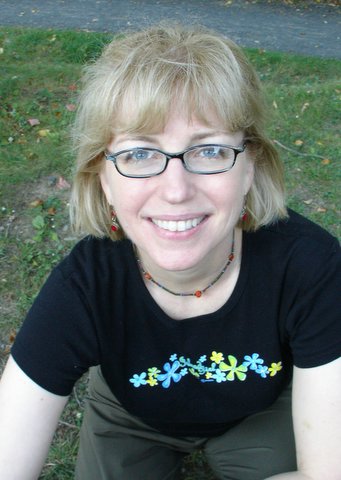
Friday, September 30, 2005
Endangered - A Play in One Act (Part III)
Podcast.
ULFIE: What are you two doing here? Haven’t you caused me enough problems? What are you doing to the cats?
MERCK: You never told me you WORKED here.
MANDOLIN: Ulfie, you’re doing it again. Remember what I told you? Deception is only self-deception.
ULFIE: Oh. You’re still into your Zen-Master phase. I don’t need your fake-philosophy sound bites.
MERCK: She’s done this to you, too?
ULFIE: Where are the cheetahs?
MERCK: I thought we were at the leopard cage. I don’t see any monkeys.
MANDOLIN: What did you ever see in her?
MERCK: What we do is not relevent to each other -- only to the frame. The frame keeps us inside. The frame relates us to each other.
MANDOLIN: Frame? Bars of a cage?
ULFIE: Outside the frame, spiritual transformation is possible.
MERCK: You’re wrong. It all goes on inside the frame.
ULFIE: What about those outside, looking in?
MERCK: Like us looking at the cats?
ULFIE: And the cats looking at us.
MERCK: That’s not the same. They can’t get out.
ULFIE: And we can?
MERCK: As soon as the artist thinks she or he is outside the frame -- well, it’s not art any more. Art is inside the frame, too.
ULFIE: Inside the cage?
MANDOLIN: You two don’t know what you’re talking about.
MERCK: If you’re such an artist, you go into the cage.
ULFIE: Hey. Don’t do that. Can’t you read the sign?
(Boethius and Dante pop up from behind the rocks.)
BOETHIUS: Surely she’s not going to come inside here.
DANTE: That’s great. Zoops inside AND outside.
BOETHIUS: (sighing) Well, I guess I’ll just be forced to maul her.
DANTE: Look. He’s got his gun.
BOETHIUS: Forget it. I’m having some fun with this Zoop. She’s been getting on my nerves.
DANTE: Boethius!
MANDOLIN: I’m going inside. I’m talking to them. I understand their pain better than they do --
ULFIE: Mandolin!
(Mandolin sticks arms through bars of cage. Boethius runs toward her, yowling and roaring.)
BOETHIUS: Yah, yah, yah! Does this scare you? I’m a pacifist, you know -- I’d never hurt you.
(runs forward)
All my rage is directed inward. That’s why my fur is so ratty.
MANDOLIN: Merck! Photograph me while they shred me and gouge out my eyes. It will be my final artistic statement.
ULFIE: I don’t want to have to do this! (raises gun) Get away from the cage! I’m going to have to tranq the cat.
(shoots tranquilizer gun -- hits Mandolin by mistake. Mandolin falls to ground, arm inside cage)
BOETHIUS: Damn it! You missed me! I was looking forward to being tranqued out for the afternoon!
MANDOLIN: I’m dying -- I’m dyyyyiiiiinnnng.
ULFIE: No you’re not. You’re going to be sedated for a few hours. I told you to move out of the way, didn’t I.
MERCK: Will she be okay?
ULFIE: Oh, just a little dazed for a while, that’s all. Probably shouldn’t drive.
MERCK: What are you going to do about the cats?
(They look at Boethius and Dante. The two cheetahs are sitting down, looking very dejected.)
BOETHIUS: Dante, what’s going to happen to us?
DANTE: I don’t know.
ULFIE: People torment the cats all the time. I don’t know why they do it. I guess they think it’s fun to see them get angry.
MERCK: It’s cruel.
ULFIE: The more “natural” the habitat, the more we can blind ourselves to our insensitivity and arrogance.
MERCK: Can we let them go? Give them their freedom.
ULFIE: Of course not.
MERCK: Are you going to have them put down? Killed?
ULFIE: No.
MERCK: Oh.
ULFIE: I’m going to give them bigger rocks to hide behind. Then I’m quitting.
MERCK: What are you going to do?
ULFIE: Will you marry me?
MERCK: I knew I wasn’t imagining things -- we DID have something together.
ULFIE: We always have --
MERCK: What about her? (gestures to Mandolin, who is seated on the ground, humming the theme to Andrew Lloyd Weber’s CATS, but it’s very offkey)
ULFIE: What do you want to do?
MERCK: Take her picture. (Takes her picture with a Polaroid. Places photo next to Mandolin). Well Mandolin. Here’s something for you. Hope you like it.
ULFIE: Let’s go -- I need to get rid of this tranquilizer gun.
MERCK: Wait. (Takes off sweater. Underneath is a baggy t-shirt which reads:)
Art
Real Life
ULFIE: Good idea. (Takes off Zoo Security t-shirt. Underneath is a different t-shirt with the following word on it.)
PEACE
MERCK: I love you, Ulfie.
ULFIE: I love you, Merck.
(They walk offstage.)
BOETHIUS: Did you see that?
DANTE: (wiping eyes) Yes.
BOETHIUS: What are you crying about?
DANTE: I always cry at weddings.
BOETHIUS: Oh, I know. We’re just a couple of old maids and we never get to do anything like that any more.
(Looks at Mandolin.)
You know, I feel sort of sorry for her.
DANTE: It’s all your fault. You should feel sorry.
BOETHIUS: Does she have a camera?
DANTE: Yeah, the other one left it there.
BOETHIUS: Why don’t we do her a favor. Let’s really give her something to photograph.
DANTE: What are you talking about?
BOETHIUS: Can you reach her hat?
DANTE: Ugggh. You want me to TOUCH that?
BOETHIUS: It’s fake fur, isn’t it?
DANTE: All the same, it looks real. (Extends paw through cage and grabs her fur hat.) You want me to get the fake fur bag, too?
BOETHIUS: Yes. Look at me. Just look at me. My fur is worse than ever -- even this fake fur is better.
DANTE: Will you stop? Mine is just as bad. What to you have in mind?
BOETHIUS: Put it on. (Dante puts on the hat) My don’t you look silly. Do you remember when we were both absolutely drop-dead beautiful? Throw me the bag. (Boethius draps it around her neck -- does some campy posing)
Now look. She’s waking up -- she’ll take a picture of us and she’ll be rich and famous.
DANTE: Are you sure?
BOETHIUS: Sure! Zoops love this dreck. Look at this.
DANTE: Look at this pose!
BOETHIUS: Aren’t we just the lovely pair!
(Mandolin staggers to her feet, gathers her belongings, clutches head -- finds hat missing. Looks in cage and shrieks.)
MANDOLIN: AARRGGH!!!!! HOW HIDEOUS!!!! What has happened?? What have you done? WHY ARE YOU WEARING THOSE THINGS? Who have you mauled????
(Runs shrieking offstage)
DANTE: Well. That was another failed attempt at art.
BOETHIUS: I give up. I don’t understand that Zoop at all. (walks toward rock) Well, I’m taking a nap. This has worn me out.
DANTE: Where’s breakfast?
(joins Boethius behind rock)
(Merck runs onstage -- obviously overjoyed -- holds up hand with ring on it)
MERCK: I knew I could trust my senses -- I knew he really cared! And now we’re married! What more can I ask of art? There is more to knowledge than the five senses. Knowledge is a simply a promise of more knowledge. It’s all in technique and not in the image. It’s how you see, not what you see.
And still. Action and perception. They go together.
Like mange and the perception of being caged.
Like being tranqed and fighting the realization we have to live somewhere in relation to a frame.
Like greeting cards and
(pauses. wipes eyes)
SADNESS.
I feel happy and yet, I feel -- sad?
(looks toward the rocks)
I miss you two leopards -- no -- CHEETAHS. I miss you. Do you miss Africa?
(pause)
Okay. I won’t ask things when I already know the answer. That’s cruel, too, isn’t it?
I just came back to tell you how beautiful you are.
(Pauses. Raises voice).
You’re beautiful! (turns to go offstage -- begins to run) I’ll be late -- but remember -- you’re beautiful. (offstage -- voice, echoing) And -- I love you!
The End.
ULFIE: What are you two doing here? Haven’t you caused me enough problems? What are you doing to the cats?
MERCK: You never told me you WORKED here.
MANDOLIN: Ulfie, you’re doing it again. Remember what I told you? Deception is only self-deception.
ULFIE: Oh. You’re still into your Zen-Master phase. I don’t need your fake-philosophy sound bites.
MERCK: She’s done this to you, too?
ULFIE: Where are the cheetahs?
MERCK: I thought we were at the leopard cage. I don’t see any monkeys.
MANDOLIN: What did you ever see in her?
MERCK: What we do is not relevent to each other -- only to the frame. The frame keeps us inside. The frame relates us to each other.
MANDOLIN: Frame? Bars of a cage?
ULFIE: Outside the frame, spiritual transformation is possible.
MERCK: You’re wrong. It all goes on inside the frame.
ULFIE: What about those outside, looking in?
MERCK: Like us looking at the cats?
ULFIE: And the cats looking at us.
MERCK: That’s not the same. They can’t get out.
ULFIE: And we can?
MERCK: As soon as the artist thinks she or he is outside the frame -- well, it’s not art any more. Art is inside the frame, too.
ULFIE: Inside the cage?
MANDOLIN: You two don’t know what you’re talking about.
MERCK: If you’re such an artist, you go into the cage.
ULFIE: Hey. Don’t do that. Can’t you read the sign?
(Boethius and Dante pop up from behind the rocks.)
BOETHIUS: Surely she’s not going to come inside here.
DANTE: That’s great. Zoops inside AND outside.
BOETHIUS: (sighing) Well, I guess I’ll just be forced to maul her.
DANTE: Look. He’s got his gun.
BOETHIUS: Forget it. I’m having some fun with this Zoop. She’s been getting on my nerves.
DANTE: Boethius!
MANDOLIN: I’m going inside. I’m talking to them. I understand their pain better than they do --
ULFIE: Mandolin!
(Mandolin sticks arms through bars of cage. Boethius runs toward her, yowling and roaring.)
BOETHIUS: Yah, yah, yah! Does this scare you? I’m a pacifist, you know -- I’d never hurt you.
(runs forward)
All my rage is directed inward. That’s why my fur is so ratty.
MANDOLIN: Merck! Photograph me while they shred me and gouge out my eyes. It will be my final artistic statement.
ULFIE: I don’t want to have to do this! (raises gun) Get away from the cage! I’m going to have to tranq the cat.
(shoots tranquilizer gun -- hits Mandolin by mistake. Mandolin falls to ground, arm inside cage)
BOETHIUS: Damn it! You missed me! I was looking forward to being tranqued out for the afternoon!
MANDOLIN: I’m dying -- I’m dyyyyiiiiinnnng.
ULFIE: No you’re not. You’re going to be sedated for a few hours. I told you to move out of the way, didn’t I.
MERCK: Will she be okay?
ULFIE: Oh, just a little dazed for a while, that’s all. Probably shouldn’t drive.
MERCK: What are you going to do about the cats?
(They look at Boethius and Dante. The two cheetahs are sitting down, looking very dejected.)
BOETHIUS: Dante, what’s going to happen to us?
DANTE: I don’t know.
ULFIE: People torment the cats all the time. I don’t know why they do it. I guess they think it’s fun to see them get angry.
MERCK: It’s cruel.
ULFIE: The more “natural” the habitat, the more we can blind ourselves to our insensitivity and arrogance.
MERCK: Can we let them go? Give them their freedom.
ULFIE: Of course not.
MERCK: Are you going to have them put down? Killed?
ULFIE: No.
MERCK: Oh.
ULFIE: I’m going to give them bigger rocks to hide behind. Then I’m quitting.
MERCK: What are you going to do?
ULFIE: Will you marry me?
MERCK: I knew I wasn’t imagining things -- we DID have something together.
ULFIE: We always have --
MERCK: What about her? (gestures to Mandolin, who is seated on the ground, humming the theme to Andrew Lloyd Weber’s CATS, but it’s very offkey)
ULFIE: What do you want to do?
MERCK: Take her picture. (Takes her picture with a Polaroid. Places photo next to Mandolin). Well Mandolin. Here’s something for you. Hope you like it.
ULFIE: Let’s go -- I need to get rid of this tranquilizer gun.
MERCK: Wait. (Takes off sweater. Underneath is a baggy t-shirt which reads:)
Art
Real Life
ULFIE: Good idea. (Takes off Zoo Security t-shirt. Underneath is a different t-shirt with the following word on it.)
PEACE
MERCK: I love you, Ulfie.
ULFIE: I love you, Merck.
(They walk offstage.)
BOETHIUS: Did you see that?
DANTE: (wiping eyes) Yes.
BOETHIUS: What are you crying about?
DANTE: I always cry at weddings.
BOETHIUS: Oh, I know. We’re just a couple of old maids and we never get to do anything like that any more.
(Looks at Mandolin.)
You know, I feel sort of sorry for her.
DANTE: It’s all your fault. You should feel sorry.
BOETHIUS: Does she have a camera?
DANTE: Yeah, the other one left it there.
BOETHIUS: Why don’t we do her a favor. Let’s really give her something to photograph.
DANTE: What are you talking about?
BOETHIUS: Can you reach her hat?
DANTE: Ugggh. You want me to TOUCH that?
BOETHIUS: It’s fake fur, isn’t it?
DANTE: All the same, it looks real. (Extends paw through cage and grabs her fur hat.) You want me to get the fake fur bag, too?
BOETHIUS: Yes. Look at me. Just look at me. My fur is worse than ever -- even this fake fur is better.
DANTE: Will you stop? Mine is just as bad. What to you have in mind?
BOETHIUS: Put it on. (Dante puts on the hat) My don’t you look silly. Do you remember when we were both absolutely drop-dead beautiful? Throw me the bag. (Boethius draps it around her neck -- does some campy posing)
Now look. She’s waking up -- she’ll take a picture of us and she’ll be rich and famous.
DANTE: Are you sure?
BOETHIUS: Sure! Zoops love this dreck. Look at this.
DANTE: Look at this pose!
BOETHIUS: Aren’t we just the lovely pair!
(Mandolin staggers to her feet, gathers her belongings, clutches head -- finds hat missing. Looks in cage and shrieks.)
MANDOLIN: AARRGGH!!!!! HOW HIDEOUS!!!! What has happened?? What have you done? WHY ARE YOU WEARING THOSE THINGS? Who have you mauled????
(Runs shrieking offstage)
DANTE: Well. That was another failed attempt at art.
BOETHIUS: I give up. I don’t understand that Zoop at all. (walks toward rock) Well, I’m taking a nap. This has worn me out.
DANTE: Where’s breakfast?
(joins Boethius behind rock)
(Merck runs onstage -- obviously overjoyed -- holds up hand with ring on it)
MERCK: I knew I could trust my senses -- I knew he really cared! And now we’re married! What more can I ask of art? There is more to knowledge than the five senses. Knowledge is a simply a promise of more knowledge. It’s all in technique and not in the image. It’s how you see, not what you see.
And still. Action and perception. They go together.
Like mange and the perception of being caged.
Like being tranqed and fighting the realization we have to live somewhere in relation to a frame.
Like greeting cards and
(pauses. wipes eyes)
SADNESS.
I feel happy and yet, I feel -- sad?
(looks toward the rocks)
I miss you two leopards -- no -- CHEETAHS. I miss you. Do you miss Africa?
(pause)
Okay. I won’t ask things when I already know the answer. That’s cruel, too, isn’t it?
I just came back to tell you how beautiful you are.
(Pauses. Raises voice).
You’re beautiful! (turns to go offstage -- begins to run) I’ll be late -- but remember -- you’re beautiful. (offstage -- voice, echoing) And -- I love you!
The End.
Friday, August 19, 2005
Secrets of the Hidden Trunk
Podcast.
"What kind of treasure is this?" Marcus asked in sheer disgust, as he sifted through the contents of the tin trunk we found in the old mine workings. It was just exactly where the old map had indicated, except what we found inside was a far cry from the gold coins, jewelry, and nuggets were hoping for. "I can't believe someone would go to the trouble of hiding a chest in an old mine, and then to draw a map to show where is was."
Marcus rolled up the sleeves of his thick cotton twill khaki-colored shirt. The muscles in his thin, wiry arms twisted like rope as he lifted the metal chest and brought it to a flat place in the arroyo.
"There's some sort of water barrel in there, too," he said. "Should I get that out, too?"
"I have to say it's pretty weird," I said. "I wonder why someone would pack silk skirts, slips, and blouses in a trunk."
So far, all we found in the trunk was women's clothing. I found it to be interesting, and I suspected that the owner of the trunk had not been much older than I was. Perhaps she was 16 to my 15. Still, it was clear that whoever had packed this trunk was a teenaged girl. There was a card, a silk heart, a little journal with doves and flowers on it, and a daguerreotype of what appeared to be her mother and father. They were a grim set of individuals. The technology was to blame, though. Who could possibly look spontaneous while sitting frozen in one pose for 15 minutes at a time while the chemicals congealed into the patterns of light and shadow?
"Look at this pink silk blouse," I said. "Is this what they used to call a "mutton leg" sleeve?" I asked.
"How the heck would I know?" said Marcus.
"Marcus, you don't have to get testy with me," I said.
"Oh, no?" His voice dripped sarcasm.
"Look at this map. It clearly indicates treasure. It does not indicate used clothing, or a Goodwill store in the side of a ravine."
His negativity was getting on my nerves. I lifted another heavy silk skirt. It was black, with gray velvet trim. The articles of clothing were well-made, and were, in my opinion, quite beautiful. I was shocked that they were in such good condition. It must have been due to the arid climate, I surmised.
"Marcus, it's not all clothing, diaries, and photos," I said. "Here's a jewelry case."
"What?" Marcus lifted up another skirt to see if there might be something else secreted away in the depths of the chest. He sucked in his breath as his investigations revealed something even more startling than the jewelry case.
It was a dagger with a heavy gold sheath encrusted with colored gemstones. It was spectacularly beautiful and I could not believe a young teenaged girl would have such a thing.
"What on earth do you think she was doing with this?" I asked.
"Maybe she was getting to ready to run off with her boyfriend to get married. Maybe this was something she had inherited and she wanted to have it in case they ran out of money," said Marcus.
"Why did she leave it behind?" I asked.
"Maybe she died in the flash flood that happened here during the California Gold Rush," said Marcus.
"Or, maybe she was kidnapped," I said. "Perhaps she just simply never got away."
"Well, whatever it was, she did not come back to the old mine diggings. It must have been too dangerous," said Marcus.
We both sensed that to enter into the Scheherazade territory of a thousand and one narratives would save no one's life. It would merely extend our journey in this ambiguous land -- a territory that was painful in that occasionally the stories we spun came all too close to nerves and real pain.
I turned my attention to the small jewelry box. I opened the delicate black lacquered lid quite cautiously.
Inside was a tiny trove of treasure, of colored gemstones, gold chains, gold jewelry. It looked like a dowry chest, except for the clothing, which made it look like a girl preparing to elope. The jeweled knife was, to put it mildly, an oddity. It was inexplicable.
"Could it have been a girl from a local brothel?" I asked. "Was the owner a prostitute? Was she planning to run away?"
Marcus looked at the skirt and blouses with a strange expression. It approximated sadness and compassion without being obviously so. A breeze ruffled his dark, longish hair, his finely cut jaw was not yet hardened into adulthood. It occurred to me again that he could easily be on the cover of a teen heart-throb magazine. My stomach trembled and I looked down at the jewels.
"What bothers me most about this is the fact she never got away," said Marcus. "My mom was an amazing cook."
It was a jolting non-sequitur.
"I don't get it," I said. It wasn't true. I understood it perfectly.
His mom had dreams, but she never had the opportunity to pursue them in a form that made any sense to anyone but herself. So, she traveled in her mind, and she hunted treasure in the far reaches of her imagination. She would never have admitted that, however. For her, the work she did to detect "sympathetic vibrations" on a map, with rutilated quartz crystals accompanied by chanting was very real.
"There has go to be something here," said Marcus, grimly. "Something more."
He grabbed up his flashlight and returned to the old digging. Crashing through the brush, he used his rock hammer to clear more space. While he crashed about, I placed the small items of jewelry in the palm of my hand and contemplated them.
"What kind of treasure is this?" Marcus asked in sheer disgust, as he sifted through the contents of the tin trunk we found in the old mine workings. It was just exactly where the old map had indicated, except what we found inside was a far cry from the gold coins, jewelry, and nuggets were hoping for. "I can't believe someone would go to the trouble of hiding a chest in an old mine, and then to draw a map to show where is was."
Marcus rolled up the sleeves of his thick cotton twill khaki-colored shirt. The muscles in his thin, wiry arms twisted like rope as he lifted the metal chest and brought it to a flat place in the arroyo.
"There's some sort of water barrel in there, too," he said. "Should I get that out, too?"
"I have to say it's pretty weird," I said. "I wonder why someone would pack silk skirts, slips, and blouses in a trunk."
So far, all we found in the trunk was women's clothing. I found it to be interesting, and I suspected that the owner of the trunk had not been much older than I was. Perhaps she was 16 to my 15. Still, it was clear that whoever had packed this trunk was a teenaged girl. There was a card, a silk heart, a little journal with doves and flowers on it, and a daguerreotype of what appeared to be her mother and father. They were a grim set of individuals. The technology was to blame, though. Who could possibly look spontaneous while sitting frozen in one pose for 15 minutes at a time while the chemicals congealed into the patterns of light and shadow?
"Look at this pink silk blouse," I said. "Is this what they used to call a "mutton leg" sleeve?" I asked.
"How the heck would I know?" said Marcus.
"Marcus, you don't have to get testy with me," I said.
"Oh, no?" His voice dripped sarcasm.
"Look at this map. It clearly indicates treasure. It does not indicate used clothing, or a Goodwill store in the side of a ravine."
His negativity was getting on my nerves. I lifted another heavy silk skirt. It was black, with gray velvet trim. The articles of clothing were well-made, and were, in my opinion, quite beautiful. I was shocked that they were in such good condition. It must have been due to the arid climate, I surmised.
"Marcus, it's not all clothing, diaries, and photos," I said. "Here's a jewelry case."
"What?" Marcus lifted up another skirt to see if there might be something else secreted away in the depths of the chest. He sucked in his breath as his investigations revealed something even more startling than the jewelry case.
It was a dagger with a heavy gold sheath encrusted with colored gemstones. It was spectacularly beautiful and I could not believe a young teenaged girl would have such a thing.
"What on earth do you think she was doing with this?" I asked.
"Maybe she was getting to ready to run off with her boyfriend to get married. Maybe this was something she had inherited and she wanted to have it in case they ran out of money," said Marcus.
"Why did she leave it behind?" I asked.
"Maybe she died in the flash flood that happened here during the California Gold Rush," said Marcus.
"Or, maybe she was kidnapped," I said. "Perhaps she just simply never got away."
"Well, whatever it was, she did not come back to the old mine diggings. It must have been too dangerous," said Marcus.
We both sensed that to enter into the Scheherazade territory of a thousand and one narratives would save no one's life. It would merely extend our journey in this ambiguous land -- a territory that was painful in that occasionally the stories we spun came all too close to nerves and real pain.
I turned my attention to the small jewelry box. I opened the delicate black lacquered lid quite cautiously.
Inside was a tiny trove of treasure, of colored gemstones, gold chains, gold jewelry. It looked like a dowry chest, except for the clothing, which made it look like a girl preparing to elope. The jeweled knife was, to put it mildly, an oddity. It was inexplicable.
"Could it have been a girl from a local brothel?" I asked. "Was the owner a prostitute? Was she planning to run away?"
Marcus looked at the skirt and blouses with a strange expression. It approximated sadness and compassion without being obviously so. A breeze ruffled his dark, longish hair, his finely cut jaw was not yet hardened into adulthood. It occurred to me again that he could easily be on the cover of a teen heart-throb magazine. My stomach trembled and I looked down at the jewels.
"What bothers me most about this is the fact she never got away," said Marcus. "My mom was an amazing cook."
It was a jolting non-sequitur.
"I don't get it," I said. It wasn't true. I understood it perfectly.
His mom had dreams, but she never had the opportunity to pursue them in a form that made any sense to anyone but herself. So, she traveled in her mind, and she hunted treasure in the far reaches of her imagination. She would never have admitted that, however. For her, the work she did to detect "sympathetic vibrations" on a map, with rutilated quartz crystals accompanied by chanting was very real.
"There has go to be something here," said Marcus, grimly. "Something more."
He grabbed up his flashlight and returned to the old digging. Crashing through the brush, he used his rock hammer to clear more space. While he crashed about, I placed the small items of jewelry in the palm of my hand and contemplated them.
Sunday, August 14, 2005
Fugue State
Podcast.
January 7, 1974. I lay down on the x-ray table and tried to maintain a cynical, tough-as-rawhide attitude. The effort was exhausting and ultimately pointless since I had little or no recall of what had happened. Palm Springs General Hospital was decorated in desert pastels. The walls of the x-ray room were a pale sandy rose, and I wondered what they would find. My neck muscles ached from where I had clenched them tightly. "Take a deep breath, dear," said Raylene, the x-ray technician whose nameplate was also in a desert pastel color. "Now release."
Repeating the sequence several times, the x-ray machine clicked and whirred. I tried not to think of what they might find. Something was causing blackouts and whatever seemed to be happening to me. I could no longer deny it, nor could I conceal it. It was no wonder I was considered a freak and a nerd at school. Since I could never remember the "episodes," I shuddered to think how many I might have had in class or in the hall.
"You are a very pretty girl, Ophelia," said Raylene. "You look just like a painting I saw in a book once. Actually, I think it was called, 'Ophelia,' too. I'll bet you have lots of admirers back home."
"Not really," I mumbled, trying to be polite. What boy would possibly like me? I was an embarrassment, a blot on society. I thought briefly of Marcus, and wondered with alarm if I had suffered a brief "episode" in his presence.
In the doctor's office, I fixed my eyes intently on the reproduction of Marcel Duchamps' modernist painting, Nude Descending a Staircase. The fragmented, angular arms and legs, the multiple images of a body in motion made me think of frames of a film superimposed upon each other. It was the record of discrete moments in time frozen onto a single moment in time. It displayed repetition of an action, but with gaps, and with the color effectively bled from it. The painting effectively represented in visual form the condition of my memory.
"We can definitely rule out a brain tumor, aneurism, or any other dramatic organic cause for what is happening," said Dr. Spangarten to Dad and myself.
"It is a shame her mother cannot be here at this time, too," said Dad. "This is going to be a great relief for her."
It was not much of a relief for me, though. At least they could do something about something like a tumor or an aneurism. It would be an explanation.
"We could do more tests, but I don't really see the point," continued the neurologist. "I will recommend following up when you get back home, and I will make a few referrals. Do you have any questions?"
Dr. Spangarten looked at me. Dad responded instead.
"That should do it. We will definitely follow up," he said, then stopped suddenly as he noticed me starting to shift my weight and squirm in my chair.
"Sorry, Ophelia," he said. "Did you want to ask a question?"
I looked up, paused, and looked into Dr. Spangarten's ruddy face, thinning and well-groomed hair. He looked like he spent some time on the golf course, I thought. He probably had one of the houses I saw while riding my bike to the canyon horseback riding place. They were white stucco with ornate desert gardens and pools in the back. Or, it was possible he lived near Marcus. The thought gave me a small knot in my stomach.
In addition to Duchamps, Dr. Spangarten's wall had a reproduction of Giacomo Balla's painting of the multiple, superimposed moving images still painting of a dachshund on a leash. It, together with Nude Descending a Staircase, perfectly represented my emotional and cognitive states.
I nodded slightly.
"Yes. What is it that has been happening, then?" I asked. "I know we don't know why."
"I think that you have been having mild seizures. It could be a very mild form of epilepsy. Or, it could be a hormonal or an electrolyte imbalance. Those are things you can find out when you get home," said Dr. Spangarten. Despite the grim news, his voice sounded kind, non-judgmental.
"Oh. Is there anything they can do?" I asked.
"Yes, there are any number of things. I would recommend that you speak to a therapist as well. There may be something precipitating them as well that is not organic," he continued.
So he did think I was a nut case.
Oh well. That made two of us.
***
On the drive back to the hotel, I made a suggestion to Dad.
"I think we should call Marcus and see if he wants to go check out his map," I said. Dad nodded his assent.
"That's a good idea." He rolled down the window. The day was surprisingly cool, and the Santa Ana winds had died down. The air was crisp and so clear the colors stung the eyes.
"This weekend?" I asked.
"Good." He smiled. "Let's do it."
January 7, 1974. I lay down on the x-ray table and tried to maintain a cynical, tough-as-rawhide attitude. The effort was exhausting and ultimately pointless since I had little or no recall of what had happened. Palm Springs General Hospital was decorated in desert pastels. The walls of the x-ray room were a pale sandy rose, and I wondered what they would find. My neck muscles ached from where I had clenched them tightly. "Take a deep breath, dear," said Raylene, the x-ray technician whose nameplate was also in a desert pastel color. "Now release."
Repeating the sequence several times, the x-ray machine clicked and whirred. I tried not to think of what they might find. Something was causing blackouts and whatever seemed to be happening to me. I could no longer deny it, nor could I conceal it. It was no wonder I was considered a freak and a nerd at school. Since I could never remember the "episodes," I shuddered to think how many I might have had in class or in the hall.
"You are a very pretty girl, Ophelia," said Raylene. "You look just like a painting I saw in a book once. Actually, I think it was called, 'Ophelia,' too. I'll bet you have lots of admirers back home."
"Not really," I mumbled, trying to be polite. What boy would possibly like me? I was an embarrassment, a blot on society. I thought briefly of Marcus, and wondered with alarm if I had suffered a brief "episode" in his presence.
In the doctor's office, I fixed my eyes intently on the reproduction of Marcel Duchamps' modernist painting, Nude Descending a Staircase. The fragmented, angular arms and legs, the multiple images of a body in motion made me think of frames of a film superimposed upon each other. It was the record of discrete moments in time frozen onto a single moment in time. It displayed repetition of an action, but with gaps, and with the color effectively bled from it. The painting effectively represented in visual form the condition of my memory.
"We can definitely rule out a brain tumor, aneurism, or any other dramatic organic cause for what is happening," said Dr. Spangarten to Dad and myself.
"It is a shame her mother cannot be here at this time, too," said Dad. "This is going to be a great relief for her."
It was not much of a relief for me, though. At least they could do something about something like a tumor or an aneurism. It would be an explanation.
"We could do more tests, but I don't really see the point," continued the neurologist. "I will recommend following up when you get back home, and I will make a few referrals. Do you have any questions?"
Dr. Spangarten looked at me. Dad responded instead.
"That should do it. We will definitely follow up," he said, then stopped suddenly as he noticed me starting to shift my weight and squirm in my chair.
"Sorry, Ophelia," he said. "Did you want to ask a question?"
I looked up, paused, and looked into Dr. Spangarten's ruddy face, thinning and well-groomed hair. He looked like he spent some time on the golf course, I thought. He probably had one of the houses I saw while riding my bike to the canyon horseback riding place. They were white stucco with ornate desert gardens and pools in the back. Or, it was possible he lived near Marcus. The thought gave me a small knot in my stomach.
In addition to Duchamps, Dr. Spangarten's wall had a reproduction of Giacomo Balla's painting of the multiple, superimposed moving images still painting of a dachshund on a leash. It, together with Nude Descending a Staircase, perfectly represented my emotional and cognitive states.
I nodded slightly.
"Yes. What is it that has been happening, then?" I asked. "I know we don't know why."
"I think that you have been having mild seizures. It could be a very mild form of epilepsy. Or, it could be a hormonal or an electrolyte imbalance. Those are things you can find out when you get home," said Dr. Spangarten. Despite the grim news, his voice sounded kind, non-judgmental.
"Oh. Is there anything they can do?" I asked.
"Yes, there are any number of things. I would recommend that you speak to a therapist as well. There may be something precipitating them as well that is not organic," he continued.
So he did think I was a nut case.
Oh well. That made two of us.
***
On the drive back to the hotel, I made a suggestion to Dad.
"I think we should call Marcus and see if he wants to go check out his map," I said. Dad nodded his assent.
"That's a good idea." He rolled down the window. The day was surprisingly cool, and the Santa Ana winds had died down. The air was crisp and so clear the colors stung the eyes.
"This weekend?" I asked.
"Good." He smiled. "Let's do it."
Subscribe to:
Posts (Atom)